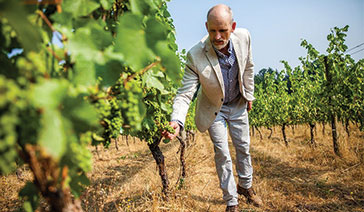



“Jason Kallsen of Twin Cities Wine interviews Jason Lett”
YouTube Video
“Vininspo! Podcast Episode 36: Jason Lett, The Eyrie Vineyards”
YouTube Video
Very limited with hand-written script label. All estate-grown, rich gold color, with amazing aromatics, palate density and depth of flavor. Bee pollen, lemon oil, nut butter, baked apples and a suggestion of pie crust – quite a unique take on the grape. As inviting as this is from the first sniff, it’s the penetration and length that send your taste buds into the stratosphere. Not a hint of residual sugar that I can taste, and yet it is nicely rounded off and rich all the way to the end.
The 2023 Oregon Pinot blanc is a brilliant straw/platinum color and has notes of hay, fresh hazelnuts, golden melon, and fresh flowers. Medium to full-bodied, it’s rounded and juicy upfront, with its more salty and delicate, savory feel delivering mouthwatering refreshment without racing acidity. Drink over the coming 5-6 years.
A lively, textured and well-balanced wine that offers chalky mineral aromas and zesty citrus flavors. It has subtle creaminess from aging on the lees for a year in stainless steel tanks. Very balanced, fresh and rather complex. Drink now. Jim Gordon
The 2023 Pinot blanc Estate comes from vines in the Sisters Vineyard, planted in 1991. Tank-fermented and matured for 11 months sur lie, it has slowly unfolding scents of quince, pear, chamomile, marshmallow and cashew. The light-bodied palate is rounded and creamy with ripe white fruit and streaks of flint. It’s balanced by tangy acidity and has a long, layered finish. 616 cases were made.
This Pinot blanc offers plenty of complexity from Sisters Vineyard (originally known as the Three Sisters). It was planted in 1991 with clones brought in by David Adelsheim. This wine is salty with notes of beeswax, subtle on the nose with touches of roasted almond. Spicy on the palate, juicy spiced pears, and nectarine flesh.
Pouring a bright straw hue, the 2022 Pinot blanc The Eyrie Vineyard is elegant and savory with aromas of almond, melon rind, citrus pithy, savory wet stones, and pure, ripe yellow apples. Rounded and refreshing at the same, with lovely density yet light on its feet, it has a silky, supple, rounded texture. Drink it over the next 4-5 years.
The 2022 Pinot blanc Estate has earthy aromas of mushrooms and cheese rind accenting a core of white peach and soft floral tones. The medium-bodied palate is luxuriously creamy and savory, its depth countered by fresh acidity, and it finishes long and layered.
The 2022 Pinot blanc is crisply refreshing, lifting from the glass with an airy mix of white flowers, wet stone and hints of lime sorbet. It's softly textured yet full of citrus and mineral tension as tart orchard fruits cascade throughout. It finishes long with touches of tropical melon and inner florals as the mouth is left watering for more. What a beauty. - Eric Guido
This less common white variety in the Willamette Valley is a great example of an approachable wine. It offers aromas of ripe pear, lemon peel, and nectarines, along with the distinctive floral notes of Pinot Blanc. On the palate, it has a medium body with a slightly oily texture, and it finishes with a bright, long-lasting acidity. Drinking Window: 2024 - 2038
The 2021 Pinot blanc, matured on the lees for 11 months, has pure scents of ripe peach, mushroom powder, jasmine, beeswax and flint. The light-bodied palate is textural and spicy with focused acidity and a long, mineral-driven finish.
Aromas of white nectarines, pear skins, some honeysuckle and lemon peel, with a little hint of chamomile and custard. Medium- to full-bodied and textured with tangy acidity and a gentle phenolic touch. It shows tension and energy and has a citrusy, flavorful finish. Drink now.
Richly aromatic Pinot Blanc from Alsatian clones planted in Eyries Sisters Vineyard. Florals are met by candied ginger alongside savoury herbal notes—a honeyed palate marked by ripe fleshy fruits and mineral-driven acidity. Flavours of stone fruit and a hint of spice lean into a rich yet brightly balanced wine.
This estate bottling is fully dry, laced with minerality and a touch of petrichor. Aromatically complex with honeysuckle and pollen highlights. These Eyrie white wines, perhaps suggesting a long life ahead, seem to sneak up on you as they trail out. The finish expands and lingers, adding volume and texture along the way with a trace of almond cookie. It's always worth noting that Eyrie planted the first Pinot Gris in the country, and with five decades of experience they still seem ahead of the curve on what to do with the grape. Very Euro in style and elegance, very Oregon in power and drive.
The 2023 Eyrie Vineyards Estate Pinot Gris showcases a pale lemon hue with a silvery rim. Aromas of golden apple, dried herbs, white pepper, and a subtle touch of wildflower honey rise gracefully from the glass. The palate offers medium-plus acidity and a rounded, medium-bodied texture, creating a lively balance. The finish is smooth and fruit-forward, with a lingering freshness that leaves a delightful impression.
The 2023 Pinot gris Estate is expressive and pretty in the glass, with notes of tarragon, ripe pear, white peach, and citrus blossoms. It’s elegant and mouthwatering, with a salinity that's balanced by refreshing acidity and a medium-bodied feel. It has a lovely elegance and concentration that’s only going to flesh out over the next few years. Drink 2025-2035.
The 2023 Estate Pinot gris comes from vines averaging about 29 years in age. Tank-fermented and matured for 11 months sur lie, it has inviting aromas of peach, apricot, green herbs, honey and spice. The medium-bodied palate features expressive, honeyed flavors and a softly oily texture. It’s balanced by fresh acidity and has a long, floral finish. 1,952 cases were made.
Attractive floral, smoky, meaty aromas lead to a dry, juicy palate of crisp green apples, Anjou pears and smoked ham. It has a touch of grip in the texture from short skin contact before fermentation. It’s complex, well-balanced and different. From organically certified grapes. Drink now. Jim Gordon
A fleshier wine from the warm 2023 vintage, notes of pear and savoury herbals, and mint leaf. Fleshy, phenolic and opulent on the palate with ripe stone. Propagation from the original three vines David Lett planted at a nursery block near Corvallis and then again at Eyrie in 1966.
A world-class ‘Estate’ gris, this 2023 edition offers serious texture and richness, with an oily mouthfeel once on the approach. Meyer lemon, cantaloupe and shades of baking spices all combine with bright starfruit and marzipan notes on the palate. Dense and approachable now, this has both the weight and structure to cellar well for another ten years. Drink 2025-2035
A bright silver/straw color, the 2022 Pinot gris is savory on the nose, with delicate toast, transparent mineral tones, wet pavement, yellow apples, and lemon rind. Medium to full-bodied, with a juicy feel, it has a fruitier profile on the palate, with a clean finish. This is a lovely and silky wine to drink over the next 6-8 years.
The 2022 Estate Pinot gris is particularly pure and expressive this year. Spring frost affected some varieties in 2022, but these old Pinot Gris vines avoided damage. It has detailed scents of green pear and apple blossom, cashews and bread dough, with a long expressive finish.
The 2022 Pinot gris Estate is delicate, with wildflowers and ginger. The palate is soothing yet energetic, finishing with a pleasantly bitter twang. – Eric Guido
Bright lemons, dried leaves and stone. Medium-bodied, silky and well-balanced with a lively finish. Drink or hold.
No one champions Pinot gris in the Willamette Valley like Jason Lett. Aromas of dried flowers, almond cream and white pepper with a generous, textured palate. Drinking Window: 2024–2038.
Pouring a silver straw hue, the 2021 Pinot gris Estate is fresh with white flowers, white peaches, and wet stones. Medium-bodied and juicy, it fills the palate with pure, fresh fruit, a soft, stony texture, and a long, clean finish. Drink 2023-2028.
The 2021 Estate Pinot gris is savory and expressive, offering aromas of mushroom powder, apple pie, lilac and flint and opening to honeyed bass tones as it spends time in the glass. The medium-bodied palate is bursting with honeyed, nutty fruit framed by rounded acidity, and it finishes long and pleasantly grippy.
Attractive nose of chopped apples, spiced pears, honeysuckle, cloves, white pepper and honey. Dry, yet with a beautiful ripeness and fullness of stone fruit. Medium-bodied, textured and spicy. From organically grown grapes. Drink now.
Nowhere in America is Pinot gris treated with the seriousness that Jason Lett gives it at Eyrie. The Eyrie, or Original Vines bottling, is one of Oregon's most outstanding wines. This estate Pinot Gris offers rich texture and deep savoury character. Picked at meagre yields from some of the estate's and, thus, the state's oldest vines. Flinty stone aromas, accompanied by spiced pear and bruised apple notes. The palate is rich and lushly fruited with ample seriousness in the way of a savoury mineral character. Sweet hay, dried apricot, honeyed pear and bee pollen all announce themselves.
I’ve been a lifelong admirer of Eyrie wines, and despite their irreplaceable contribution to the development of the Oregon wine industry the road has not been without more than a few potholes. But history has proven David Lett a savant, and Jason Lett a savior, and the wines today not only are absolutely in perfect harmony with the taste and style preferences of the 21st century, they provide a template for the future. No irrigation, no tillage, no herbicides, native yeasts and light handling allows the wines to speak unencumbered. Sounds easy, but it’s not. This is aromatic, inviting and complex, a balance of fresh herbs, clean minerals, apple skin and flesh with touches of petrichor and a salty finish.
A bright straw color, the 2023 Chardonnay Estate offers savory fresh notes of Marcona almond, fresh apples, candle wax, and citrus oils. It’s silky on the palate, with a weightless feel and good length, never falling flat. It’s silky, seductive, and pure, with a graceful texture. Drink 2025-2035. 524 cases were produced.
The 2023 Chardonnay Estate comes from old vines in Eyrie's original vineyard and younger plantings from the Sisters Vineyard. Barrel-fermented and matured for 11 months in less than 10% new oak, it has pretty scents of poached pears, quince, elderflower, beeswax and panna cotta. The light-bodied palate features concentrated, creamy flavors and a gently mouth-coating texture. It’s balanced by vibrant acidity, and it has a long, nuanced finish. 524 cases were made.
A delicate style, with lilting apple and lemongrass flavors that sail on the graceful finish. Drink now.
A vivid, mouthwatering, charming wine. It offers ample apple, citrus and mineral flavors on a sleek texture of good acidity and a light to medium body. The lemon, lime, flint and peach-skin flavors are delicate and persistent. Drink now. Jim Gordon
This Chardonnay is a blend of the older vines here at the Eyrie site from both 1965 and 1968, and 2013 planting from the Sisters Vineyard. A massal selection of clones, including Wente clones, came to David Lett from Spring Mountain's La Perla Vineyard. Honeyed, on the nose, with gorgeous stone fruits, the palate is fleshy with rich lemon, roasted almonds and honey.
A blend coming from young vines planted in 2013 and old vines that date from 1965 to 1974, the bright yellow/silver-colored 2022 Chardonnay Estate opens to aromas of golden apples, Meyer lemon, salted earth, and wet stone, followed by fresh flowers, honeycomb, sweet citrus, and poached pears. Elegant and full-bodied, it’s fruity and appealing, decadent but refined, with fresh hazelnut, a silky, supple, waxy texture, and a rounded feel throughout. It’s both fruity and delicately savory. A total charmer, it will provide a wide drinking window for enjoyment. Drink 2024-2034.
The 2022 Chardonnay Estate has inviting aromas of dried apples, mixed nuts, beeswax and spicy undertones. The medium-bodied palate offers surprisingly concentrated, savory flavors. Its luxurious, mouth-coating texture is balanced by mouthwatering acidity, and it has a long, flavorful finish.
Fresh citrus and floral character on the nose. A delicious palate exhibiting key lime and mineral notes. Medium-bodied with fresh acidity. Clean citrus finish. Drink or hold.
Deep aromatics of lemon curd, chamomile and white pepper from the estate Chardonnay from Eyrie Vineyards is always a blend of young and old vines. Wente and the Sterling Clone come from eight-year-old vines and the Draper selection comes from 57-year-old vines in the original Eyrie Vineyard. The palate shows juicy Meyer lemon pulp and fresh lemon pepper provides a spicy lift with rich, creamy textured mouthfeel that is lifted at the finish by a streak of white pepper. Drinking Window: 2024 - 2039
Coming from relatively younger vines planted in 2013 and pouring a pale yellow hue, the 2021 Chardonnay Estate takes on delicate floral aromatics of citrus blossoms, quince, and fresh pear. Medium-bodied, it fills the palate with elegant, ripe fruit and is silky-textured, with great balance and a clean finish. Drink this refreshing, supple white over the next 5-6 years. The 2021 releases from The Eyrie were tasted at the winery and tasting room in McMinnville with owner and winemaker Jason Lett. In addition to producing some of the benchmark Pinot gris, Pinot noir, and Chardonnay in the Willamette Valley, they produce a wide range from Trousseau to Pinot Meunier to explore. Having only tasted out of barrel the previous year, I was especially impressed with the range of 2021 Pinot noir from the estate. Annual production is at approximately 10,000 cases, using 95% estate-grown fruit.
The 2021 Chardonnay Estate offers exotic aromas of ripe peaches, honey, pie crust, tangerine oil and musky floral perfume. The medium-bodied palate is satiny and expansive with an impressively concentrated core of spicy fruit. Its broad, mouth-coating texture is balanced by fireworks of fresh acidity, and it has a long, spicy finish with flavor that goes on and on.
The 2021 Chardonnay Estate wafts up with a pretty blend of sweet white flowers, almond custard and crushed peaches. It's soft and enveloping with candied citrus complementing its ripe orchard fruits as a hint of chamomile forms toward the close. The 2021 finishes with medium length and tactile mineral tinge, leaving the slightest lingering hint of lime zest. - Eric Guido
This shows aromas of golden apples, citrus pith, hints of ground spices, honeysuckle and crushed stones. Medium- to full-bodied with polished, sleek texture and attractive juiciness in the middle. It shows a lingering, textural delicacy with a fresh and citrusy aftertaste. Drink now.
A blend of young and old vines, only one new barrel in the wine's entire production. Wente and the Sterling Clone total 39% of the blend and come from eight-year-old vines in the Sisters Vineyard. The Draper selection represents the balance of the blend and comes from 57-year-old vines in the original Eyrie Vineyard. This is a beautiful Chardonnay with aromatics of tinned peaches, honey, ginger and spiced pear. The palate shows a brilliant savoury character. Cardamom pods, chamomile and beeswax mark a depth and richness that is balanced by delicate fresh acidity and a spicy finish.
The 2023 Eyrie Vineyards Chasselas doré shines with a pale lemon-yellow core and a delicate silver-tinged rim. The nose reveals crisp aromas of ripe yellow pears, fresh lemon peel, and a subtle hint of lemongrass. On the palate, it’s rounded and textured, with a soft, low-acid profile and a slight oily richness that adds depth. An interesting bottle of wine from a very rare grape varietal in Oregon.
The 2023 Chasselas doré Cuvee Leger is lovely, with notes of fresh melon, salty earth, lime oils, wet stones, and almond. It’s a low alcohol white (it's actually under 10% despite saying 10.5 on the label), with a silky medium-bodied frame and an elegant feel. Eyrie has lowered the price significantly to get this into BTG (By The Glass) programs.
The 2023 Chasselas doré comes from 12 rows of un-grafted vines in the Sisters Vineyard. Tank-fermented and matured 11 months sur lie, it has alluring aromas of white peach, pineapple, marshmallow and musky floral perfume. The light-bodied palate offers concentrated, white fruit flavors. It pairs a softly oily texture with vibrant acidity and has a long, perfumed finish. 522 cases were made.
In Oregon, this Swiss grape variety makes a low-alcohol, earthy, citrusy wine with a rustic edge. Aromas of cheese rind, with flavors of lemon zest and a touch of cream. From organically certified grapes. Drink now. Jim Gordon
Eyrie is the largest producer of Chasselas in the US. This one is salty and briny, even though it was made with full malolactic fermentation. Harvested at 17 brix and picked in the middle of September. Fresh, with great texture, seaspray and ginger. Mint, white pepper. There's yellow fruit, and a lingering eucalyptus-like mint with pine resin that stays seemingly forever.
A unique wine from Oregon, the 2023 The Eyrie Vineyards Chasselas doré delivers green apple and juicy melon notes on the nose with shades of pie crust and marzipan. The palate is fresh and shows a great mineral steak with a soft mouthfeel. Enjoy now and over the next few years. Drink 2025-2031
The 2022 Chasselas doré The Eyrie Vineyard is pretty and floral, with white flowers, pear, and citrus. The palate is juicy and inviting, with a lovely medium-bodied feel. It’s floral, pretty, and delicately savory with white pepper on the palate. Low alcohol and quaffable, it’s going to drink beautifully over the next few years. The estate is bumping up production so that restaurants can take more of this wine on.
The 2022 Chasselas doré packs a lot more punch than its modest 10% alcohol might suggest. It has a detailed perfume of white peaches, rose petals and candle wax. The light-bodied palate is rounded and creamy with perfumed flavors, mouthwatering acidity and a long, textural finish. 330 cases produced.
More savory than sweet, the 2022 Chasselas doré opens in the glass with an array of incense and dried flowers giving way to ginger-spiked green apples. It's crisp and chiseled in feel, with bracing acidity enlivening its liquid stone core as sour melon hints settle on the senses. The 2022 tapers off dry, with medium length, yet perfectly refreshing. - Eric Guido
So much character and freshness on the nose, with sliced lemons, savory herbs, citrus blossoms and crushed stone. Medium-bodied, textural and very polished, with a light phenolic undertone and vivid acidity. Delicate and refined. Drink now.
This rare domestic Chasselas doré is a refreshing, light, yet surprisingly aromatic and vibrant wine. Sourced from just 12 rows of the variety planted in the Eyrie Sisters Vineyard, it offers lovely floral and citrus notes, green apples, a hint of stone fruits, and a touch of nuttiness. With its zesty acidity and low alcohol levels - 10.5%, it keeps inviting you to take another sip. Drinking Window: 2024 - 2038
A silver straw hue, the 2021 Chasselas doré is elegant, balanced, and savory with aromas of fresh green pear, citrus blooms, and chive. Medium-bodied, it’s silky and juicy on the palate, with a rounded feel, and has a fresh lift and saline on the finish. A beautiful and elegant wine with modest alcohol levels, it will be incredibly versatile at the table. Drink 2023-2028.
The 2021 Chasselas doré has inviting aromas of apple pie, honeycomb, hay and mushroom. The light-bodied palate has a concentrated core of spicy fruit, a satiny texture, vibrant acidity and a long, pleasantly grippy finish. Pure and fresh, it will pair widely at the table. 264 cases were made.
Golden apples, nectarines, saltines, salted almonds and chamomile on the nose. Sleek and fresh, with a gently waxy texture and a light to medium body. From organically grown grapes. Drink now.
A grape made predominantly in Swiss Alpine regions and the Jura has been made at Eyrie since 2013. This wine is extra lightweight and airy, from old vines, some as old as 35 years. A full year on the lees in barrel and this wine's crisp acidity and fresh fruit shine through. Aromatics of freshly squeezed lemon, ripe apricot and delightfully floral. The palate is crisp yet textured with light stone fruit flavours, peach skin, nectarine and grapefruit and a finish that turns on savouriness and minerality.
A dry, Alsatian-inspired style Muscat, the 2016 Muscat Ottonel Estate pours a bright medium yellow hue and is highly perfumed with wild tropical flowers, lychee, preserved peaches, and crystalized honeycomb. Medium-bodied and spicy on the palate, it’s saline, with notes of almond, and has a clean, perfumed finish. Drink 2023-2028.
The 2016 Muscat Ottonel comes from the original vines planted in 1965, which were torn out in 2022 and won't be replanted. It's gregarious on the nose with wafts of candied peaches, tangerine, honey, musk and floral perfume. The medium-bodied palate is soft and dry, with a gently oily texture and a long, flavorful finish.
The 2015 Muscat Ottonel comes from vines planted in 1965. It has a gregarious nose of musk, white and yellow peaches, slate, petrol and beeswax with touches of jasmine and nuts. The palate is light-bodied, dry and restrained, with tangy acidity and a long, textured finish.
Editor's Choice - A truly distinctive and fascinating take on Muscat, this will enchant some tasters and puzzle others. Don't look for the ripe orange scents and flavors usually found with this grape. This is a bone-dry, aromatic mix of mint and cannabis, white flower and herb. The palate is long and detailed, with a spicy kick.
A strong herbal edge with fresh-hop aromas, as well as a lemon and sage. The palate is smoothly arranged with silky, fresh and pastry-like texture. Drink now.
A bright yellow hue, the 2019 Melon De Bourgogne Estate is on the lees for two years before bottling, so this is the current release. It’s fresh and savory with saline and crushed stones, as well as fresh flowers. It’s a very pretty and rounded style to enjoy with more than oysters. It has real texture. Drink 2024-2032.
Matured for two years in used oak, the 2019 Melon de Bourgogne is complex and savory on the nose: poached pears and panna cotta are accented by wafts of honey, mushroom powder, walnuts, flint and candle smoke. The light-bodied palate is mouth coating and compellingly savory. It’s balanced by tangy acidity and has a very long finish. Only 75 cases were made.
The 2019 Melon de Bourgogne is honeyed and floral, revealing an entrancing blend of raw almonds, pine nuts, basil and crushed green apples. It opens with a lovely inner sweetness, contrasted by sizzling acidity as ripe orchard fruits and minty herbal tones swirl throughout. Medium in length, this finishes remarkably fresh and lifted, with a note of lemony custard. By Eric Guido on May 2024
From the original David Lett planting, mistakenly identified as Pinot Blanc when it came from UC Davis, it's a rare Willamette Valley Pinot Blanc. It's got great aromatics of beeswax, fleshy cantaloupe and peach skin. It sees ample time on lees, with two years in the barrel with no stirring. The palate offers a rich pheonlic mouthfeel, there's depth of ripe stone fruit and a complementary nuttiness through the finish.
A deep gold, this delicious wine, purportedly a domestic version of Muscadet, bears only a passing resemblance to the Loire Valley wine. This is rich and succulent, loaded with ripe fruit flavors of melon and papaya. It feels relatively light in acid, and may be at or near its peak drinking window. That said, with Eyrie wines being known for astonishing longevity, that is pure speculation.
The 2018 Melon de Bourgogne was bottled in September of 2023 after nearly five years in barrel. It's complex and savory, with scents of dried apples, mushroom powder, decaying leaves and roasted nuts. The palate is rich and concentrated with explosive, honeyed flavors balanced by refreshing acidity and an expansive, mouth-coating texture that drives a long finish.
Straw tinge. Aromas of apricots, cloves, lemon curd and chamomile. Concentrated and textured, almost oily, with a medium body and caressing layers. Gently spicy. Kept in neutral oak for two years before bottling. From organically grown grapes. 85 cases produced. Drink now or hold.
The 2017 Melon de Bourgogne, which winemaker Jason Lett calls, "the anti-Muscadet," was matured on the lees for two years without bâtonnage. It features scents of white peach, citrus, bread dough and almonds with flinty streaks. The light-bodied palate is creamy yet energetic with alluring, saline-tinged fruit, and it offers a long, flavorful, gently grippy finish. Only 85 cases were made.
Coming from 50+ year-old vines, the 2023 Pinot Gris from The Eyrie is a bright straw hue, offering more depth and complexity in its notes of ripe melon, beeswax, honeyed citrus, tarragon, and savory wet stones. It’s medium to full-bodied, has more glycerin richness without being heavy, and is only going to improve with another couple of years. It has notes of bitter almond through the finish, with a lovely added richness of structure. 109 cases were produced.
Pinot gris from Eyrie, as proven by a 40-year-old bottle tasted at the winery a couple of years ago, can age as well as the finest Burgundy. The few cases labeled ‘The Eyrie” with handwritten script are from the remaining original vines planted more than a half century ago. The textured, refreshing minerality that is a hallmark of Eyrie’s white wines is in full flower here, and yes, flower pollen is part of the flavor parade. The rich gold hue suggests some intentional oxidation and aging in a percentage of new oak. Apple and Asian pear fruit is dappled with spicy cinnamon. Very few wineries in the Pacific Northwest provide the opportunity to literally drink from the history of the region, and this is one.
The 2023 Pinot gris The Eyrie comes from vines with an average age of 54 years. Tank-fermented and matured for 11 months sur lie, it has ripe aromas of quince, peach, beeswax, cereal milk and spice. Full-bodied and hedonistic, it floods the mouth with concentrated, savory flavors, and it has an alluring, satiny texture. It’s balanced by bright acidity and has a very long finish. 109 cases were made.
This small-production wine is made from old vines on The Eyrie properties and offers expansive floral and spicy aromas and absolutely mouth-filling fruity, savory flavors. Anjou pears, smoked ham and brie cheese. Great acidity and freshness lead to a lingering finish. Drink now. Jim Gordon
This wine is from the original David Lett plantings in 1965; this is perennially America’s best Pinot gris by a large margin. It’s rich and honeyed on the nose in this warm vintage, quite opulent. On the palate, savoury herbals, rich nectarine flesh, lemon pastry cream. A lengthy finish that shows the stuffing of this often dismissed variety.
The 2022 Pinot gris The Eyrie is deep and savory, driven by umami more than overt fruit. Its apricot aromas are accented by tones of brie, almonds, honey and pastry. The medium-bodied palate is layered and mouth coating, though its refreshing acidity will allow it to pair with "black olives and chicken or sardines on toast," winemaker Jason Lett says. Yum!
Taking on a touch more straw pigment, the 2021 Pinot gris The Eyrie is savory and ripe with aromatics including a touch of flint, wet stone, melon, and Meyer lemon zest. Full-bodied, with great intensity and lots of salinity, it has a brilliant core of fruit and a long finish. It’s exceptional and long on the palate and will have lots of life ahead of it over the next 6-8 years.
Jason Lett calls this Pinot gris "a liquid manifesto." He believes the grape can equal Pinot Noir in its ability to "reflect the nuances of site, craft and vine age." During my recent visit to the winery he pressed the point with a bottle from 1983 that was still drinking beautifully. But this young PG is perfectly delicious, with a refreshing stony minerality that soaks on through the finish.. The fruits coalesce around apple, peach and citrus and linger with a power and presence that suggests this too will age for decades.
The 2021 Pinot gris The Eyrie, from the original plantings, is arresting and exotic! It's bursting with generous aromas of orange oil, white peaches and apricot, lemongrass and musky perfume, shifting to reveal honeyed undertones as it opens in the glass. Light-bodied, pleasingly grippy and concentrated, it offers vibrant acidity and a long, layered finish.
When aromas of a tangy lemon glaze on an orange olive oil cake rise from the glass, I'm all in. This is not your typical Pinot gris. It has body and searing acidity to accompany flavors like apricots, cardamom and candied orange peels that are positively Condrieu-like. So beautiful. — Michael Alberty
This is attractive with distinct aromas of yuzu sorbet, white currants with hints of citrus blossom, young walnuts and crushed stones. Very textural and smooth with medium to full body and tight tension of ripe citrus and stone fruit in the middle. At the same time, it shows delicacy and floral fragrance. Very attractive. Drink or hold
A bright straw color, the 2023 Chardonnay The Eyrie is elegant and pretty, with notes of raw almond, fresh flowers, poached apples, and lovely citrus pith and oils. It’s medium to full-bodied, with more depth, but not at all heavy, and it has a silky, floating feel and a graceful finish. 100 cases were produced. It’s only 12.6% alcohol.
The 2023 Chardonnay The Eyrie comes from vines planted in 1965 and 1968. Initial wafts of flint give way to red apple, quince, roasted hazelnuts, beeswax and wet stone aromas. The light-bodied palate is satiny and mouth coating with expansive, honey-nut flavors. It’s balanced by pleasurably tangy acidity and has a very long, layered finish. It should be long lived in the cellar. 153 cases were made.
The outstanding 2023 ‘The Eyrie’ is a dense and polished effort from this warmer vintage. Japanese pear and alongside marzipan and brioche notes that all mingle well with the beautiful tension in the wine. Enjoy now and over the next eight to ten years. Drink 2025-2033
Bright silver/yellow-hued, the 2022 Chardonnay The Eyrie takes a more decadent tone on the nose, with elegant baking spice, lemon custard, frangipane, white flowers, and poached pear or apples. Electricity pulses underneath its more decadent, luxurious, and mouthwatering feel, and it’s long on the palate. This is a fantastic Chardonnay. Drink 2025-2037
Sourced from the oldest vines which are now losing vigor, the flavors are detailed, pointillistic and compact, unpacking gracefully while breathing in the glass. I wouldn’t beat up this wine with aggressive aeration; best to open it, pour it in a big round stem, and let the glass do the work. Bee pollen, marmalade, a hint of maple syrup, baked apple, cinnamon dusted pie crust and more and more unfold with time and attention.
The 2022 Chardonnay The Eyrie has slowly unfurling scents of apple peel, raw almonds, freshly baked bread and desiccated citrus blossoms. The light-bodied palate features restrained, savory flavors, a gently creamy texture balanced by refreshing acidity and a long finish. It will benefit from 2-3 years in bottle.
Cellar Selection - Prepare to sip history. The Eyrie Chardonnay represents a vintage's best barrels, made with fruit from some of the last Draper field selections to be found anywhere. The Eyrie is a mineral-driven affair, with aromas and flavors of saline, rosemary, jasmine, yellow apples and lemon brioche. It is marked by a mildly fleshy texture and brilliant acidity. Enjoy now until the mid 2040s. — Michael Alberty
So layered, minerally and savory in style, this is super-concentrated yet sleek and balanced. Laced with stony, almost chalky elements among green apple, kiwi, pine and thyme accents. Light to medium in body, low in alcohol but so vivid in flavors. Drink now or hold. Jim Gordon
The 2021 Chardonnay The Eyrie is a bit reserved initially but opens to reveal notes of hazelnut, citrus pith, and fresh flowers. Highly expressive on the palate, it has a medium to full-bodied frame and a driving core of ripe fruit, with fresh energetic tension through its long finish. This remarkable Chardonnay from Jason Lett is going to have substantial longevity. Drink 2024-2032.
The 2021 Chardonnay The Eyrie, matured in 16% new oak, is especially expressive and powerful, offering surprising concentration for its modest, 12.8% alcohol. It features lush scents of apple pie, honeysuckle, beeswax and toast with streaks of flint and singular spicy undertones. The medium-bodied palate explodes with waves of pure, ripe fruit balanced by fireworks of mouthwatering acidity, and it has a very long, energetic finish.
Spry and sleek, with floral and elegantly layered apple and lemon flavors that glide on the graceful finish. Drink now. 156 cases made.
Apricots, peaches, spiced apples, nutmeg, cloves and white pears on the nose. Ripe, creamy and spicy, with a medium body and caressing stone fruit. All in balance, with a long and sophisticated finish. From vineyards planted in 1965-1974. From organically grown grapes. 156 cases produced. Drink now or hold.
The 2022 Eyrie Vineyards Estate Pinot noir showcases a radiant, translucent ruby in the glass with a pinkish rim, exuding grace and finesse. The bouquet unfolds with aromas of ripe red raspberries, wild strawberries, rose petals, and a touch of sandalwood, complemented by hints of fresh pine and earthy spice. On the palate, it is lively and precise, showcasing silky, fine-grained tannins that provide structure without overshadowing its delicate profile. Light on its feet yet brimming with vibrant energy, the wine offers juicy red fruit flavors, balanced by a subtle herbal undertone. The finish is long and polished, leaving lingering impressions of cherry blossoms and savory spice.
The transparent ruby-colored 2022 Pinot noir Estate is pretty and floral with notes of lovely, fresh red cherries, roses, spices, and fresh forest herbs. It’s pure and lifted on the palate, with fine-grained, well-defined tannins, and while it’s approachable, it has an elegant, defined structure. Weightless, but with a juicy feel, the wine is fully dry and should be very appealing over the next 8-10 years.
The estate bottling blends grapes from five separate estate vineyards. It’s reductive and needs extra breathing time to burn off some of the struck match character and open up the flavors. Brambly blackberries, black cherry, cola and black tea highlight the immediate impressions. A dark, dense, powerful wine that should open up over time.
Elegantly structured and bright with fresh acidity, this red offers compelling flavors of cherry and cranberry highlighted by green tea and dusky spices. Gathers steely tension toward refined tannins. Drink now through 2033.
Eyrie's estate wine Pinot noir soars like an eagle with aromas of blackberries, violets and the pine needles, duff and mushroom qualities often found on a forest floor. Tart black cherry and lemon zest flavors are joined by notes of cacao nibs and a wee bit of bone marrow. Crisp acidity and silky tannins offer ample support. — Michael Alberty
The 2022 Pinot noir Estate is dark and brooding in the glass, mixing flowery underbrush with crushed rocks, cooling white smoke and hints of dried strawberry. It splashes across the palate, energetic and crisply refreshing, showcasing tart red and blue fruits and crunchy mineral tones, all motivated by brisk acidity. A peppery flourish defines the finale as the 2022 tapers off with a pleasantly tart concentration. Notes of licorice linger beneath an air of violet florals.
A pure, elegant, complex and savory red that shows all the diverse flavors of the grape variety, from red cherries to black tea to savory herbs. A medium body and moderate tannins support fresh red fruit, cloves and minerals. Tangy and well balanced. From organically grown grapes. Drink now or hold.
From the first pour of this vibrant purple-hued pinot, you'll know you're in for an extraordinary ride. This estate bottling blends Pinot from Eyrie’s 5 certified-organic estate vineyards, where the Willamette Valley's iconic variety got its start. This sophisticated, well-balanced, and highly aromatic wine offers notes of candied strawberries, orange peel, pink peppercorns, and a bouquet of florals, highlighted by the distinct scent of rose petals. On the palate, the grippy tannins and vibrant acidity hint at a promising ageing journey. Drinking Window: 2024 - 2042
The medium ruby 2021 Pinot noir Estate is fresh with aromas of wild strawberries, fresh roses, and beet root. Medium-bodied and elegant, it floats across the palate with fine tannins and a delicately earthy finish. It’s a killer value and a great snapshot of what Eyrie is all about. It is hands down one of the best entry level Pinot Noir with a clear vision of what you can expect further in the range. Drink 2023-2030.
The 2021 Pinot noir Estate is blended from all five of Eyrie's estate vineyards: the Eyrie, Sisters, Outcrop, Roland Green and Daphne. Cranberry, raspberry and strawberry aromas are accented by wafts of autumn leaves, earth and dried herbs. The light-bodied palate features concentrated berry, earth and spice layers. It's framed by softly astringent tannins and vibrant acidity, and it has a long, nuanced finish.
The 2021 Pinot noir Estate lifts from the glass with mentholated freshness, giving way to dried roses and strawberries. Silky and enveloping, it possesses a core of vividly ripe wild berries and sweet herbal tones that sesonate over a tactile staining of saline minerals. Grippy tannins saturate through the long, spicy finish as repleting inner florals and bitter hints of licorice fade. - Eric Guido
This shows notes of spiced herbs, dust and ground spices with vivid and juicy cherries and redcurrants. Despite being medium-bodied, it shows weight and structure with impressive concentration of blue-fruit in the middle, and crunchy acidity. Tannins are firm and crunchy with an attractive chocolaty finish. From organically grown grapes. Drink or hold.
The 2022 ‘Estate’ Pinot noir is a world-class coming from this site first founded back in 1965. This is rich, layered and highly nervy stuff that is drinking remarkably well in its tension-filled youth. Once on the nose this takes on salty soils with wet rock, Mandarin orange rind and suggestions of cardamom with bright guava fruits. The palate is soft and refined, showing a silky texture and excellent minerality. Not big or burly but full on the mouth, with terrific flavor density, enjoy now and over the next fifteen plus years. Drink 2025-2040
This blends grapes from five separate estate vineyards, crafting a wine that perhaps best captures the Eyrie zeitgeist as it exists in the current decade. To my palate, along with 'The Eyrie' bottling, this is the smoothest and most quickly accessible of the winery's 2019 Pinots. The distinctive components that characterize Eyrie – earth, bramble, neutral wood, dried herbs, breakfast tea, tart fruits and a hint of funk – are here in perfect harmony. If you can put the word ‘classic’ in front of any Oregon Pinot noir, it would be this one.
The 2019 Pinot noir Estate is expressive and transparent and offers incredible concentration for its weightless frame. Medium ruby in the glass, tones of flint, tar and burnt orange give way to a kaleidoscope of raspberries, red cherries, rose petals, pipe tobacco and forest floor. Medium-bodied, silky and seamless, it has a generous core of spicy fruit and a very long, layered finish. Streaked with flinty tones, it deserves to unwind in bottle for another 3-5 years, and it will be long-lived in the cellar.
The aromas show reduction on the first whiff. Beyond that are notes of cola, dark cherry and fresh mint. The palate is full of exuberant, seamless dark fruit flavors. It's outrageously tasty—a textbook example of the pleasure Willamette Valley Pinot Noir offers. — Sean P. Sulliva
Translucent ruby-red. Mineral-tinged black raspberry, cherry and floral scents are complemented by baking spice and succulent herb flourishes. Bright and energetic on the palate, offering sharply defined red and blue fruit, lavender and spicecake flavors braced by a spine of smoky minerality. Closes very long and precise, displaying lingering red fruit and floral qualities and well-judged, even tannins.
Aromas of ground white pepper, ripe strawberry, red cherry and crushed stone. Medium-bodied with fine, velvety tannins. The spice and fruit are married together with fresh acidity, which drives the palate through the long finish. Complex, yet approachable and totally delicious. Best after 2024
Pale ruby, the 2018 Pinot noir Estate features pretty scents of dried cranberries and red cherries, tangerine peel, sage and earth, unfolding as it spends time in the glass. The medium-bodied palate is powerful and grainy with seamless acidity and a long, fragrant finish.
Editors Choice - Eyrie now makes six single vineyard and reserve-level Pinots, along with this gorgeous estate blend. If you can put the word “classic” in front of any Oregon Pinot noir, it would be this one. With perfect balance and authoritative tannins, it's mouthfilling and aromatic—a complex wine that does not rely entirely on pretty fruit to make a statement. Plum, brambly blackberry and some chewy herbs give it length and strength. This can certainly age for a decade or more. Paul Gregutt
Aromas of spiced cherries, wild strawberries and dried herbs. Medium-bodied with creamy tannins. Concentrated and brooding on the palate. A dried-floral note comes through. Great intensity and length. Good aging potential. Best after 2023.
A bright transparent ruby hue, the 2022 Pinot Meunier Estate is floral, very pretty, and expressive in the glass with notes of fresh roses, white peppery spice, wet stones, and mixed berries. Medium-bodied and refreshing, it floats on the palate, with transparency and depth, and it has a lovely, defined structure, a gravelly feel, ripe tannins, and a clean finish. Drink 2024-2034.
The 2022 Pinot Meunier floods the senses with red cherry, black plum, oolong tea leaves, mint and earth. The medium-bodied palate features concentrated, earth-laced flavors. It’s framed by velvety tannins and bright acidity and has a long, layered finish. 258 cases were made.
Dusty rose and shavings of cedar give way to crushed cranberries and sage as the 2022 Pinot Meunier comes to life in the glass. This is juicy and round with an energetic blend of crisp wild berries and mineral tones, all guided by brisk acidity. It tapers off with a peppery flourish and wicked freshness, leaving a chalky sensation and hints of spice.
The Eyrie Pinot Meunier combines a freshness and rusticity; it spends nearly two years in almost 100% neutral oak. Full destemed as it already gives so much savour character. Aromas of wild green strawberries, mint and alpine meadow herbs and flowers. On the palate, savoury with rosehip oil and choke cherries along with a piquant note of blood orange and sea salt.
The 2021 Pinot Meunier, fermented and matured without new wood, is nuanced and very easy to drink. It has intense aromas of cranberry sauce, red cherries and blackberries, plus nuances of wild fennel, amaro, underbrush and floral perfume. The medium-bodied palate has precise, tea-textured tannins, seamless freshness and a long, spicy finish. "This is a climate-change superstar," notes winemaker Jason Lett. The variety "has extremely wooly buds, which protects them," he continues. "The white fuzz on its leaves reflects the sun—it's an adaptation, like plants in the desert that are often fuzzy."
Notes of strawberries, dried cranberries, roses, lilacs and spices. Medium-bodied, delicate and ethereal yet structured and compact, with a polished, silky aftertaste. Drink now.
The 2019 Pinot Meunier pours a medium ruby hue and is lifted with ripe mixed berry fruit, red flowers, and white pepper. Medium-bodied, with fresh, mouthwatering acidity, its fine tannins expand on the palate with a balanced, gripping feel, and it has a note of a toasty incense on the finish. Drink 2023-2028.
Most commonly known as the sturdy component of blanc de noir Champagnes, this rather rare single varietal still wine unmasks the grape and reveals more of its true character. The flavors are surprisingly light – red currant, rose hips, herbal tea, orange peel – but complex and nicely intertwined. The tannins are present and accounted for but balanced, ripe and supportive. The flavors linger gracefully through a long finish. At the end of the day, it's a fine complement to the Eyrie Pinot Noirs, with its own special strengths.
The 2019 Pinot Meunier is expressive and detailed. It has a medium ruby color and aromas of wild red and black berries, orange peel, pipe tobacco, iodine and leather. The medium-bodied palate features restrained, mineral-driven fruit, chalky tannins, mouthwatering acidity and a long, spicy finish that calls you in for another sip.
Editors Choice - The aromas start out reduced, with notes of gun smoke so prominent that they cause some distraction. Beyond that are aromas of grapefruit, fresh herb, potpourri and red fruit. The flavors are light-bodied, fresh and lively. Cinnamony tannins back it all up. More, please! Decant to clear the reduction if it needs it. — Sean P. Sullivan
Mushrooms, earth, raspberries, mulberries and crushed cherry stones here. Orange pith, too. Relatively firm but fine carpet of tannins, giving structure. Medium-bodied, creamy and complex. 375 cases produced. From organically grown grapes. Drink now.
Primarily from two estate vineyards, Daphne and Sisters, this is foresty and lean. It leads with the scent of plum tea and turned humus, the flavors grippy and austere, with a hunger-inducing tartness.
Medium ruby, the 2018 Pinot Meunier features scents of red and blue berries, conifer, Earl Grey tea leaves and woodsmoke with tinges of saline. The light-bodied palate is delicately intense and silky, its layers of detailed, earthy fruit gliding seamlessly into a long, layered finish.
Tannic and muscular, this rare varietal bottling is most concentrated in the back half, yet quite aromatic right out of the bottle. Red currant, rose hip, lemon tea and wild raspberry come to mind. The wine gains concentration and lingers through a long clean finish. Paul Gregutt.
Aromas of wild raspberries and fresh strawberries with touches of dried roses and leaves. Medium-bodied with fine, silky tannins. Some savory character to the fresh fruit. Soft yet textured on the palate with bright acidity and a racy finish. Drink now.
This pinot meunier from the Daphne and Sisters vineyards is slightly more turfy and vinous than the 2019 Estate (also recommended here), with scents of wild mushroom and wild cherry, sandalwood and soil. It's lean with a quiet elegance, for duck.
The 2022 Eyrie Vineyards Trousseau Estate offers a pale red hue with delicate aromas of tart cranberries, wild herbs, and a hint of white pepper. The palate is light yet flavorful, with bright red fruit, a subtle chalky texture, and a clean, mineral-driven finish. Refined and fresh, this is a graceful expression of a rare varietal in Oregon.
A pale transparent red hue, the 2022 Trousseau Estate is fresh with notes of cranberries and dewy fresh herbs. A beautiful vintage of this wine, the palate offers depth and intensity of flavors, with spices, a chalky texture, and a clean, stony finish. It has structure, as well as a long floating finish with notes of fresh flowers and savory earth. Drink it over the next 6-8 years.
A pale transparent red hue, the 2022 Trousseau Estate is fresh with notes of cranberries and dewy fresh herbs. A beautiful vintage of this wine, the palate offers depth and intensity of flavors, with spices, a chalky texture, and a clean, stony finish. It has structure, as well as a long floating finish with notes of fresh flowers and savory earth. Drink it over the next 6-8 years.
Remarkably pretty, the 2022 Trousseau mixes savory woodland berries with rosemary, sage and hints of wet stone. It opens with a pretty inner sweetness and crisp red berry fruits, taking on a tinge of spice and white pepper toward the close. It finishes incredibly fresh and clean, tapering off with medium length and a pleasantly crunchy sensation.
This highly textural, acid- and tannin-driven wine grips tart cherry, cranberry and raspberry flavors firmly. A grape variety from the Jura region of France. It’s tight, light-bodied and very dramatic in mouthfeel. Drink now or hold. Jim Gordon
Moving to the reds, the 2021 Trousseau Estate pours a pale, bright ruby color and is lifted with poppy red fruit, fresh flowers, and orange peel. Medium-bodied, it has a soft mineral texture, smooth and refreshing acidity, and fresh, clean lift. Long on the palate, it’s a fantastic wine to drink with a light chill over the next few years.
It's been several years since I last tasted this wine, and the vines, planted in 2012, have had some time to develop deeper roots. The aromatics of this latest vintage are as evocative and compelling as Pinot Noir, the color reminiscent of Sangiovese, the fruit flavors a compendium of flowers, herbs, rhubarb and berries. The balance is fine, the tannins rugged but proportionate, and the finish brings touches of earth and citrus into play. In short, this is a fascinating and complex wine that is a perfect complement to Jason Lett's expansive portfolio of Pinot noir.
The 2021 Trousseau combines fresh raspberry, strawberry and floral aromas underpinned by more savory wafts of pepper, dried herbs and earth. The light-bodied palate features complex layers of berry and spice structured by softly chalky tannins and vibrant acidity, and it has a long, detailed finish.
This has an attractive peppery and spiced character with crunchy red berries, hints of nutmeg and dusty soil. It is light and ethereal with the crunchiness of sour cherry mixed with savory herbs and dried citrus peel. Chalky and fleshly red-fruited finish. From organically grown grapes. Drink now.
Jason Lett believes the Trousseau variety offers the Willamette great potential in a warming climate a delicate fruit-forward wine with fresh berry aromas complemented by savoury herbs. Flavours of bright cranberry and pomegranate are streaked with graphite, while strawberry fruit leather, dried thyme and eucalyptus carry the finish. All the while delicate with substantial tannin.
Medium garnet, the 2019 Trousseau opens with wild, savory aromas of tobacco, leather, tar, briar fruit and nuances of Angostura bitters and underbrush. The light-bodied palate is chalky and refreshing with earth-laced fruit and an alluring, spicy finish.
Editors Choice - This blend of Pinot Noir, Pinot Meunier and Trousseau is the poster child for balance. The show starts with blackberry and thyme aromas, along with notes of earth and citrus. The Trifolium's zingy acidity and optimal tannic structure support flavors like black cherry, cocoa nibs and a nice pot roast. Best trio since Rush.
The 2020 Trifolium is a blend of all red varieties and vineyards from Eyrie Vineyards (77% Pinot Noir, 15% Trousseau, 8% Pinot Meunier). It's darkly floral, bringing the color magenta to mind, with a subtle tinge of wood smoke accentuating woodland berries, rosemary and crushed stones. It possesses a lovely inner sweetness and crisp red berry fruits, offset by hints of sour citrus and cedary spice. This is dense in character, with edgy tannins that linger alongside a suggestion of steeped plum. While clearly a product of the difficult 2020 vintage, the Trifolium is a compelling wine.
This is a one-time cuvee to represent 2020 as a blend from all the estate’s vineyards. Aromas of red cherries, raw mushrooms, plums stones and some ash. Medium-bodied, with bright acidity and crunchy tannins. Sweet fruit here but tobacco tinge. 77% pinot noir, 15% trousseau and 8% meunier. Drink now.
Usually a delicate expression for Eyrie, the 2022 Pinot noir Sisters Vineyard is over the top out of the gate. The palest red ruby shade, its perfume is floral and highly expressive, with notes of fresh flowers, wild strawberries, Herbes de Provence, and stony earth. It has dark mineral notes on the palate, with real intensity, refreshing, mouthwatering mineral persistence, and a long finish. It seems like it’s going to be a cuddly wine, but it’s savory and structured on the palate. Drink 2025-2037
Jason Lett has divvied up his vineyards by age and elevation, this being the lowest site, planted four decades ago. It’s aromatic with a burst of pie cherry fruit and a whiff of tanned leather. The tannins are firm and lightly grainy, giving texture through the finish. Some nice details build as the wine opens, with touches of breakfast tea, lead pencil and lemon pepper. This is a sturdy, well-balanced, rather forceful selection.
Matured in used oak, the 2022 Pinot noir Sisters has a pale garnet color and scents of dried cherries, shiitake mushrooms, underbrush and spice. The medium-bodied palate is delicately styled with earth-laced flavors and soft, silky tannins. It’s enlivened by bright acidity and has a long finish. It seems to be closing down since I tasted it last year, and it will benefit from several years in the cellar. 507 cases were made.
Sleek and graceful, with elegantly layered raspberry and cranberry flavors that take on appealing accents of green tea and forest floor as this glides toward refined tannins. Drink now through 2032. 507 cases made.
Editors Choice - Sisters is four acres of Pommard and Wadenswill clones planted in the Dundee Hills in the late 1980s. It leads with aromas of loamy soil, meadow flowers and dark, brambly berries. The flavors are a mix of boysenberries and black tea, with wee bits of coriander, sage and crushed brick dust. I'd love to try this with a pork belly banh mi.
The 2022 Pinot noir Sisters Vineyard is lifted and refined, with a dusty bouquet of dried black cherries and flowery underbrush lifted by hints of mentholated herbs. It's more energetic within, silky-smooth yet spry, with bright wild berry fruits and a cascade of rosy inner florals that swirl throughout. Saline mineral tones emerge toward the close as the 2022 finishes with a youthful tension, leaving edgy tannins and notes of spiced blood orange that punctuate the experience quite nicely.
Lovely nose with some forest berries, red currants, crushed stone and potpourri. Medium-bodied with silky tannins. Velvety, poised and delicious, with a succulent, vibrant finish. Drink or hold.
Smoky gunflint, fresh mint and pine tar aromatics come from the Sisters, a vineyard planted in 1989 that now serves as an experimental nursery for Jason Lett and Eyrie Vineyards. It is the lowest elevation of the Eyrie estate sites. The palate gives gobs of earthen mineral tones, turned soils, and hints of pencil lead. A richness of pomegranate molasses, smoky clove and tea tree oil savouriness round out this wonderfully textured and structured Pinot Noir. Drinking Window: 2024 - 2040.
The 2022 ‘Sisters’ comes from vines set on Jory and Marine Sedimentary soils. This is translucent in the glass, offering a silky texture with lovely weight and tension. Ripe guava and red raspberry fruit flavors mingle well with salty soils and cran-pomegranate. Gorgeous now, and wonderfully nervy, enjoy over the next ten to fifteen years. Drink 2025-2040.
The translucent ruby 2021 Pinot noir Sisters is delicately floral and spicy, with aromas of rose petal, fresh raspberry, and fresh baking spices. Medium-bodied and lifted, with fine tannins and fresh acidity, it’s long on the palate with a fresh. Lingering. rosy perfume and a clean lift off the finish. It’s attractive now and will continue to drink well over the coming 6-8 years.
The 2021 Pinot noir Sisters has intense aromas of cranberries, blackberries, bergamot and mossy bark. As it spends time in the glass, it reveals an array of spicy, bitters-like accents that really add complexity to the nose. The medium-bodied palate is silky and vibrant with an understated yet layered core of detailed fruit, and it has a long, spicy finish. Its fruit is youthfully coiled at this stage, and it will benefit from 3-5+ years in bottle.
A handsome red, finely structured and detailed, with expressive raspberry and cranberry flavors that are accented with green tea and dusky spices, building tension toward medium-grained tannins. Drink now through 2032. 196 cases made.
The 2021 Pinot noir Sisters blossoms in the glass with woodland berries and herbs complicated by allspice and clove. The palate is round and supple with cooling acidity and ripe wild berries cascading throuhout, leaving a sweet spice tinge toward the close. This finishes with remarkable freshness, a gentle sour citrus twand, and slowly fading hints of red plum. The 2021 is already showing beautifully, but there's the balance to excel over the next five to seven years of cellaring.
Fragrant aromas of sage, pine, earth, cherries, raspberries and orange pith. Some peppercorns. It’s medium-bodied, with tightly-knit tannins. Intellectual. 504 cases. From organically grown grapes. Drink or hold.
Jason Lett describes the Sisters Vineyard Pinot Noir as ‘juicy and joyful’ from a vineyard site with a terroir that ‘doesn't shout, but instead lets the fruit shine.’ A blend of half Pommard and half Wadenswil, this Pinot offers bright berry and mint aromatics that speak from Eyrie's lowest elevation site. The palate is lushly red-fruited. Strawberries, alongside cranberry relish and a smoky flintstone. The freshness of red fruit turns into notions of black tea and mint to carry us to the finish.
Jason Lett has divvied up his vineyards by age and elevation, this being the lowest site, planted four decades ago. There is a pleasing, earthy funkiness to the aromatics, a touch of leather and compost. Those same flavors wrap around tight raspberry fruit in a compact core. The Sisters name references the three Pinot family grapes planted here – Noir, Blanc and Gris. An earthy finish rings out with a tang as the wine fades.
Medium ruby, the 2019 Pinot noir Sisters has a delicate perfume of raspberries, rhubarb, tar, orange peel and tea leaves with touches of flint. The light-bodied palate is powdery and fresh with fragrant floral character and a long finish.
This is a solid pinot with so much strawberry and tangerine character that it’s hard to put down. The tannins are very solid and slightly chewy, but I think this will come together beautifully. Try after 2024.
Sisters, on the low point of the Eyrie’s Dundee Hills property, serves as the vineyard’s experimental lot, with multiple clones of pinots blanc, gris and noir. This wine, from the pinot noir clones, starts off firm and savory, with funky scents of tar, wet earth, then plum and black cherry. The elements are not playing well together until the second day, when the wine turns luminous, like a sunbeam through the loam, beaming red and black cherry juiciness supported by suede-like tannins, silky, fresh, harmonious and quite long. —P.J.C.
Medium ruby, the 2018 Pinot noir Sisters has an extraordinary perfume of raspberry preserves, blood orange, exotic spices and dried flowers. The light-bodied palate is elegant and seamless, with concentrated, fragrant fruit and a long, layered finish.
This vineyard, the lowest estate site, is now 40 years old and planted to Pommard and Wädenswil clones. It makes a very pretty wine loaded with fresh raspberry fruit flavors and limned by lemony acidity. There is a touch of mushroom in there, and though this leans toward the elegant side of the grape, the tannins add a bit of muscle to the finish. As with almost every Eyrie wine this should continue to evolve and improve over the next decade and longer. Paul Gregutt
Limpid ruby-red. A highly complex bouquet evokes ripe red fruits, incense, candied flowers, musky earth and exotic spices. Stains the palate with finely detailed bitter cherry and red currant flavors that steadily turn sweeter and deeper through the midpalate. Shows outstanding clarity and mineral cut on the gently tannic finish, which hangs on with superb, floral-driven tenacity.
Aromas of ripe plums, blackberries and toasted herbs. Full-bodied with fine tannins. Savory red fruit with driving acidity. Well structured, with great intensity. Rather long. Best after 2023.
The south-facing Sisters Vineyard in the Dundee Hills, planted in 1987 to UC Davis clones of Pinot noir, ripens fruit well to give a full expression to ripe black cherry fruit with hints of violets, mineral, earth, and spice. Even in a warm year such as 2018, the wine retains a lovely freshness; the colour is not exaggerated, and the tannins are silky and very fine. This wine drinks well enough now, but it should be a real knockout with a bit of age. Drinking Window 2021 - 2031
The 2022 Pinot noir Outcrop is a pale ruby hue and is pretty and floral with notes of ripe candied raspberries, pretty flowers, and sweet herbs. Medium-bodied and well-defined, with a really mouthwatering structure, it’s the most savory of these wines from Eyrie, with notes of tea leaf and mountain herbs. Drink 2025-2040.
Note the color on all of these wines – textbook Pinot, with a sunset hue that suggests it’s a wine much older than the actual vintage. This site was planted over the past 20 to 40 years on thin, rocky, volcanic soils overlooking the original Eyrie vineyard. It’s compact and aromatic, with balanced flavors of raspberries, red currant and blood orange, accented with coffee grounds and red licorice. Feels fairly high in acid more than tannin, with finishing flavors of citrus. Better tasting, more open and full after 24 hours.
The 2022 Pinot noir Outcrop is beginning to tighten up in bottle, showing a bit less youthful exuberance than when I tasted it last year. It comes from Wadenswil clone vines planted between 1982 and 2000 at 280 to 360 feet in elevation and was matured in 19% new oak. It has a pale ruby-garnet color and delicate scents of sour cherries, cranberries, pipe tobacco, tea leaves and lichen. The medium-bodied palate is elegantly styled, offering concentrated, spicy red fruit flavors despite its weightless, silky frame. It’s balanced by bright acidity and has a long, complex finish. It will benefit from several years in the cellar and should be long lived. 269 cases were made.
Offers a tight core of lively acidity and refined tannins framed by delicately structured cherry, cranberry, dill and forest floor accents. Drink now through 2034.
Editors Choice - Outcrop is five acres of the Wadenswil clone planted with a northern exposure between 1982 and 2000. The wine's ripe blackcap raspberry, Stargaze lily ad orange zest aromas make an arresting perfume. The Outcrop's tart blackberry, black tea and earthy, plum -like dried ancho chile flavors seal the deal. This is beautifully balanced, with lemony acidity and silky tannins.
Lavender and violet tones give way to wet stone and hints of blackberry as the delicate 2022 Pinot noir Outcrop slowly blossoms in the glass. Silky-smooth and pliant, it sweeps across the palate with tart red and blue fruits, taking on a spicy tension toward the close. While not overly tannic, the 2022 finishes remarkably long and potent, with a flowery concentration that lingers on.
A savory, textural and vibrant red with notes of wild strawberries, dried roses, wild herbs, crushed stone and white pepper. It’s medium-bodied with bright acidity and character. Silky texture with an ethereal character. Refined and infused with a long, textural finish. Drink or hold.
Own-rooted, Wadenswil vines from a northern exposure produce wines of savoury structure in the Eyrie Vineyards Outcrop. Fruit character predominates the aromatics, with a spicy blood orange melding with notes of sweet strawberries and savoury dried lavender. The palate goes savoury immediately with tea leaves, fresh mint, and a melange of white and green peppercorns. Structure, texture and, ultimately, longevity will win out. Drinking Window: 2024 - 2043
The 2022 ‘Outcrop’ Pinot noir was sourced from this small site in the Dundee Hills AVA. This is already drinking beautifully right now, with rocky soils and red rose petals on the nos alongside orange rind and shades of white pepper. The palate is plush and round, with a generous mouthfeel and plenty of mouth-watering acidity. Bright and fresh, enjoy over the next fifteen plus years to come. Drink 2025-2040
Brilliant ruby, the 2021 Pinot noir Outcrop is expressive in its aromas of wet stone, fresh pine, and grenadine. Medium-bodied, it offers more concentration and personality on the palate, revealing ripe tannins, juicy, ripe, red-berried fruit, and an elegant, long finish. It’s drinking well now and will continue to improve with 3-5 years bottle age. Drink 2025-2035.
The 2021 Pinot noir Outcrop has complex aromas of strawberries, blackberries, tobacco leaves, citrus peel, bitters and foresty tones. The medium-bodied palate is detailed and expressive with layers of wild fruit and spice. It combines superfine tannins with vibrant acidity, and its addicting, negroni-like bite and flourish of autumnal accents calls you back to the glass. It will gain savory complexity in bottle over the next 15+ years.
Vibrant and delicately complex, with refined cherry and cranberry flavors that layer on accents of green tea and fresh forest floor, finishing with fine-grained tannins. Drink now through 2031.
The 2021 Pinot noir Outcrop is earthy and savory in the glass. An herbal thruust combines with hints of white pepper, crushed stones and wild strawberries. This is juicy and full of energy, with racy acidity and cool-toned red fruits gliding across the palate, leaving olive and sage suggestions. Inner florals echo over a bed of grippy tannins as the 2021 tapers off long and full of zesty tension, leaving a slowly fading hint of sour citrus.
Attractive aromas of toasted spices, black cherries and wild blueberries with hints of lemon peel, violets, walnuts and dust. It’s medium-bodied with layers of compact red and blue fruit and firm tannins around it. It is still a little tight, with impressive tension and energy. Lingering, savory finish. From vineyards planted from 1982 through 2000. Drink or hold
With the Outcrop Pinot, Jason Lett believes the site starts to mark the wines, offering a reliable savoury character and chewy tannins. Own-rooted, Wadenswil vines from a northern exposure produce wines of savoury structure. Aromas of brambleberries, Spanish lavender and wintergreen are marked by savoury herbal notes. The palate is deftly structured, offering savoury herbs, green tea leaf and a dollop of pomegranate.
This site was planted over the past 20 to 40 years on thin, rocky, volcanic soils adjoining the original Eyrie vineyard. This seems like a more extreme version of the other Pinots – more earthy, with bitter herbs and thinner fruit. That said, it keeps its poise and balance, and makes a pretty good comparison to a fine Village Burgundy from a top vintage. Where will it go from here? Time will tell.
The 2019 Pinot noir Outcrop is a beautiful wine with arresting aromatics: a core of wild berries is accented by tea leaves, lavender, Campari and lemon peel. The light-bodied palate is grainy and fresh with surprising concentration for its approachable frame and a very long, detailed finish.
Editors Choice - Boysenberries and violets create a beautifully aromatic perfume, aided by touches of saline, earthy oregano and leather. The wine's bright acidity matches its firm tannins in support of flavors like black cherry, chicory coffee and blood orange. This wine is almost too pretty to drink. Almost.
Outcrop is from a rocky ridge on the property that The Eyrie purchased in 2010. When first poured it has more than its share of funk, a feral underlay of wet Dundee red soil, humus and celery leaf. After a day, a haunting, spicy, mostarda-scented strawberry fruit comes through, even as the earthiness persists. It needs time, but nothing here is out of place.
From 25-year-old vines, the medium ruby colored 2018 Pinot Noir Outcrop takes time in the glass to reveal dried cranberries and blackberries, tea leaves, rose petals, burnt orange and flint. The medium-bodied palate is surprisingly silky and refreshing with concentrated, floral fruit and a long finish with a fan of Angostura-like spices.
This site was planted over the past 20 to 40 years on thin, rocky, volcanic soils. There's a whiff and flavor of funky chicken yard underlying tart fruit flavors of raspberry and cherry. The acidity is well-balanced and the wine shows good length and composition through a lingering finish.
Shimmering garnet. Expansive aromas of fresh red fruits, botanical herbs and baking spices take on smoky mineral and floral overtones as the wine opens up. Juicy and precise in the mouth, offering alluring sweet raspberry preserve, candied rose and spicecake flavors that convey depth as well as vivacity. Finishes on a juicy red fruit note, with silky, polished tannins and excellent, floral-driven persistence.
More muscular, the 2022 Pinot noir Roland Green has more depth to its ruby red color, but it’s still transparent. The nose benefits from a little air on opening, revealing pure black raspberries, cherry blossoms, dark earth, mossy forest floor, and sweet herbs. It has broader shoulders and a heartier, more muscular feel on the palate, with an expansive structure, so it can stand up to a lot. Built for the long haul, it’s going to hold on for decades. Drink 2025-2040
This pours a bit darker in the glass than the other single vineyard selections, bringing marionberry and black raspberry fruits, rich earthy flavors, a dusting of coffee grounds and well-textured tannins. As with all the single vineyard selections from Eyrie, this strikes a unique note that defines its particular place in the overall vineyard. It’s a wine that wants extra aeration, and as is true of all Eyrie wines, the ageability is off the charts.
The 2022 Pinot noir Roland Green comes mainly from Pommard and Wadenswil clone vines planted in 2016 (plus some of the old vines planted in 1988) in volcanic soils at 540 to 720 feet in elevation. Matured in used oak, it has slowly unfurling scents of flint, pomegranate, rhubarb, orange peel, pipe tobacco and underbrush. The full-bodied palate features concentrated, flinty flavors. It’s framed by velvety tannins and bright acidity and has a long, succulent finish. It will benefit from time in the cellar.
Showing a bit tight right now but retains appealing notes of cranberry, sandalwood and peat moss while building tension toward a bite of tannins. Drink now through 2033.
Cellar Selection - Roland Green is five acres of Pommard and Wadenswil clones planted at 540-720 feet elevation in the Dundee Hills. Its raspberry, sweet pea flowers and Ponderosa bark aromas are mesmerizing. Texture-wise, this is your favorite pair of corduroys matched with fine-grained tannins and flavors of pie cherries, black pepper, caraway seeds and black pepper. Enjoy now until 2039. — Michael Alberty
The Roland Green Pinot noir really shows off its elegance and balance. With inviting aromas of rich red fruit, wet soil, and fresh mint leaves, it leads into a palate filled with complex savoury notes. The tannins are impressively smooth, making it a real pleasure to drink, especially for such a young wine. A bright pop of acidity keeps it fresh and lively, tying everything together beautifully. Drinking Window: 2024 - 2040
The 2022 Pinot noir Roland Green is savory to the core, with a darkly floral bouquet that blends earth tones and exotic spices with hints of tomato leaf, lavender and blackberries. It opens with a gentle inner sweetness and silky textures as masses of ripe red and blue fruits slowly saturate, developing a mineral tinge toward the close. The 2022 leaves the palate stained in primary concentration as a lick of sour citrus adds contrast and fine-grained tannins coat the senses. Deep and complex, with immaculate balance, the Roland Green is the total package.
Vivid, floral aromas and dramatic cherry flavors light up this medium-bodied and well-balanced wine. Rose petals, violets, strawberries and raspberries show great breadth on the palate. From organically grown grapes. Drink now or hold.
The 2022 ‘Roland Green Vineyard’ comes from this small, 6-acre site set on ungrafted Wadenswil and Pommard clone Pinot noir. This is fresh and lithe stuff, offering wet stone with orange peel, suggestions of forest floor and black truffle shavings that mingle well with tart red and dark fruits. Brimming with bright acidity, enjoy now and over the next ten plus years to come. Drink 2025-2038
Coming from 550 to 720 feet of elevation, the 2021 Pinot noir Roland Green is deeper ruby-colored and takes on a deeper aromatic profile with ripe red and some black fruit, black raspberry liqueur, moss-covered stones, and fresh violets. Medium-bodied, with a rounded mouthfeel, it fills the palate with ripe fruit up front then turns savory with notes of tea leaf, and its riper structure comes through as well. It’s long on the palate, with notes of scorched earth on the finish. Drink 2024-2034.
The 2021 Pinot noir Roland Green possesses the expressiveness, detail and weightlessness of the best wines from the 2021 vintage in the Willamette Valley. The nose is a deep well of red cherry jam, cranberry, tea leaves, lavender and alpine spices, revealing additional nuances with each return to the glass. The palate features complex, spicy, conifer-laced flavors structured by finely astringent tannins and vibrant acidity, and it has a very long, layered finish.
A handsome red, finely structured and detailed, with expressive raspberry and cranberry flavors that are accented with green tea and dusky spices, building tension toward medium-grained tannins. Drink now through 2032.
Newer vines on six different rootstocks, planted in 1988 to Wadenswil and Pommard clones. This wine offers bright fruit aromatics with pine-bough accents. The palate is a display of tangy red fruits, cranberry, pomegranate and early-season strawberries, offering a red-fruited raciness that is finished with crushed stone minerals lifted by evergreen tips and fresh mint.
The 2021 Pinot noir Roland Green is youthfully coy, with a delicate blend of wilted violets, lavender and dried blueberries. This is sleek in feel, with racy acidity propelling its perfumed wild berry fruits across the palate with ease. Hints of licorice resonate as the 2021 finishes potent and tense, with lingering spicy tinges and finely etched tannins.
This is blue-fruited with notes of savory herbs, lilac, pink peppercorns and crushed stones. Medium-bodied, juicy and tense with crunchy acidity and an attractive herbal fragrance to it. It has a vivid core of red and blue berries with some zestiness in the finish. From organically grown grapes. Drink now.
From a vineyard first planted in 1988 to ungrafted Pommard and Wadenswil clones, this initially opens tight and tannic. The unmatched track record for ageworthy Oregon Pinot established by the Lett family at Eyrie comes at a price – these wines, even when held back an extra year or two, can be tough to unpack. This is dense with composted earth, black fruits, espresso-soaked tannins and a thread of black licorice. After 24 hours the wine begins to unwrap; after 48 it's bursting open aromatically and the mouthfeel finally softens up and spreads out with strawberries, black cherries and very light suggestions of toasted almonds.
Medium ruby, the 2019 Pinot noir Roland Green is scented of red cherry and cranberry with savory tones of mushroom, leather, pipe tobacco and licorice. The medium-bodied palate's concentrated, broody fruit is supported by grainy tannins and seamless acidity, and it finishes long and spicy. Give it another 3-5 years in bottle.
Editors Choice - Red cherry aromas are joined by notes of lemon peel, loam and the clean saline of a fresh-shucked East Coast oyster lining. Bing cherry, sweet Cavendish pipe tobacco, sage and blood orange tea flavors coat the mouth. Bright acidity and fine-grained tannins. — Michael Alberty
A note shared between myself and colleague Corey Warren for this wine was ‘confidence.’ It’s entirely itself, exotic, sanguine and slightly earthy, leading with savory notes of horehound and sassafras, the flavors unabashed without being the least bit forward, understated but for a peppercorn burst of tannins.
The 2018 Pinot noir Roland Green has a medium garnet color and slowly unfurling aromas of red cherries, Angostura bitters, rose petals and iron, gaining aromatic detail and intensity as it spends time in the glass. The medium-bodied palate boasts concentrated, spicy fruit, a silky texture and bursts of acidity that refresh the long, layered finish. Give it 3-5 years in bottle or some time to unwind in the decanter.
Cellar Selection - Among the half dozen 2018 Pinots from Eyrie this is the tightest and least immediately expressive, which suggests decanting and/or aggressive aeration prior to early drinking. It grudgingly reveals strawberry and black cherry fruit with a spine of iron. The compact flavors and inner rigidity suggest that this should be cellared and could easily improve for a decade or longer. Drink 2026 to 2035.
Glistening red. Assertively perfumed cherry, black raspberry, pungent flowers and herbs on the incisive, smoke-tinged nose. Delivers a suave blend of depth and vivacity, offering appealingly sweet red and dark fruit, floral pastille and spicecake flavors that spread out steadily through the back half. Shows fine detail and mineral thrust on the youthfully tannic finish, which clings with outstanding tenacity.
Roland Green includes an older plot of own-rooted vines adjacent a young block on heat-tolerant rootstocks. It yielded a wine of admirable tension and breadth in 2018. You can taste the stalwart old-vine poise in the wine today, turned soil and tanbark, blood and cherries, along with youthful savory notes of violets, rose petals, bramble and star anise. It is, in a word, complex. The flavors are luxurious, the savor tugging at the fruit with a gentle insistence, with a cherry-skin concentration to the texture that’s wildly appealing. Cellar to watch it evolve.
The 2022 Pinot noir Daphne sports a deeper jeweled ruby color and offers notes of pure black cherries, forest pine herbs, wildflowers, and dark stones. Coming from their highest elevation vineyard, it is pure and crystalline on the the palate, with a rounded and expansive feel, ripe tannins, and a clean finish. It’s a fantastic and complete offering and might be the wine of the vintage for Eyrie.
Daphne is the highest site among the winery’s vineyards, topping out at 890 feet. It’s principally planted to Pinot gris, but a bit of Pinot noir was put in 50 years ago, and those vines are sourced for this selection. This begins as an austere, reserved wine, compact with suppressed power. Dried herbs, wild strawberries, pomegranate and a hint of mushroom build a compound palate, which expands beautifully on the second day. The tannins and acids play nicely against each other. A three decade lifespan is not out of the question for this wine.
The 2022 Pinot noir Daphne comes from Pommard clone vines planted between 1974 and 1984 at 820 to 860 feet in elevation. Matured in 12% new oak, the nose is bursting with pure scents of bramble berry preserves, blood orange, oolong tea leaves and juniper. Medium-bodied, the mouth is flooded with layer after layer of ripe, perfumed fruit. The wine is structured by lacy tannins, vibrant acidity and a long, succulent finish. 178 cases were made.
Editors Choice - My favorite Daphne this side of "Scooby Doo" is a small plot of 50-year-old Pommard vines planted at 820-860 feet in the Dundee Hills. Its refreshing aromas of rose petals, rosemary, plums, pine needles and wet slate lead to flavors like Bing cherries, marjoram, lavender and green tea. Daphne's fleshy texture is joined by bright acidity and silky tannins.
The 2022 Pinot Noir Daphne is a veritable flower shop on the nose, mixing peppery rose with wild strawberries and cedary spice. Lifted and racy in feel, it washes across the palate with crisp red berry fruits, taking on perfumed inner florals and a tinge of salty minerality toward the close. Hints of sour citrus mix with a tart cranberry bitterness as a bump of brilliant acidity ties everything together remarkably well, finishing fresh and full of tension. While not overtly structured or concentrated, the Daphne possesses a balance that promises many years of positive evolution.
Crushed strawberries, frozen raspberries, dried violets and mixed spices on the nose. Medium-bodied with a juicy, fruit-driven character on the palate and zesty acidity. Round, mellow and velvety with plenty of juicy candied cherry character in the flavorful, long finish. There is so much vibrancy at the center. Drink now or hold.
The 2022 ‘Daphne’ comes from this 13 acre ‘Daphne Vineyard’ parcel in the Dundee Hills. The volcanic soil character is evident here, showing crushed wet rock, red rose petals, orange rind and shades of teaberry on the nose. The palate is smoky and wonderfully textured, with serious tension. Pure in terms of its ripe red fruit profile, enjoy now and over the next ten plays years. Drink 2025-2037
A stunning red and blue fruit showcase from the Daphne, towards the greatest heights of the Dundee Hills. Lush violet tones fall away with sweet strawberries and pine bough aromatics with refined elegance on the forest floor. Juicy blue and red fruits on the palate, with mint, savoury wild thyme and raspberry leaves. This is a sterling example from the cool, long 2022 vintage. Beautiful.
A personal favorite at this tasting, the 2021 Pinot noir Daphne is pure and vibrant and pours a jeweled ruby hue. Fresh with notes of cranberry cocktail, spiced orange, and saline, it’s medium-bodied and persistent on the palate. It brings great, balanced tension and ripe fruit, with a citrus-driven feel while remaining ripe, and has fine tannins and a long, mouthwatering finish. Drink 2025-2035.
The 2021 Pinot noir Daphne offers a plethora of fruit: strawberry pie, red plums and Cara Cara orange define the nose until, with air, it reveals accents of forest floor and dried flowers. The medium-bodied palate is impressively concentrated, sweeping through the mouth with perfumed flavor layers. It has a firm frame of chalky tannins, fireworks of fresh acidity and a tremendously long finish. It's the most powerful and expressive of the 2021 single vineyards at this stage, and it will reward cellaring.
Elegant and seductive, offering expressive plum, raspberry, green tea and forest floor accents that build richness toward refined tannins. Drink now through 2032.
Darkly alluring, the 2021 Pinot noir Daphne wafts up with a burst of crushed stones, giving way to licorice, cherry cola and violet pastille. This is silky-smooth and supple with ripe red and blue fruit depths underscored by tactile mineral tones as candied citrus hints emerge toward the close. This finishes staining, long and full of tension. A tart wild berry resonance lingers through the gently tannic and classically dry finale. Simply stunning.
Fantastic purity of fruit here, with beautiful aromas of lavender, rosemary, cranberries, wild strawberries, oranges and pomegranates. So concentrated and flavorful, with a medium body and sleek, silky tannins. Fantastic persistency of wild spice and berry fruit. From organically grown grapes. 151 cases. Delicious already, but better after 2024.
The highest elevation of the Eyrie sites, the Daphne vineyard planted in 1974, sits at 260m and on very shallow topsoil. Its hallmark is a Pinot Noir of great aromatic richness and complexity. The 2021 Daphne is wildly fragrant with crushed savoury herbs, wild violet florals and a great depth marked by tea leaves and smashed berry fruits. Despite the herbal character, a real purity of fruit shines through on the palate. Crunchy red berry fruits, notes of pomegranate molasses amid pine tar and flinty mineral flecks lift the wine's finish but promise of a developing character worth revisiting in a decade.
Daphne is the highest site among the winery’s vineyards, topping out at 890 feet. Principally planted to Pinot gris, a small 1974 plot of Pinot noir grows at the top. There the thin soils and cold winds emphasize the acids, giving this wine a juicy, lemony foundation. The red fruits are quite tart, strawberries and raspberries not yet at full sugary ripeness. The style fits well into the total Eyrie Pinot portfolio. This wine should be aggressively aerated, and is built to appeal to acid lovers.
The 2019 Pinot noir Daphne is juicy, highly aromatic and irresistible! Medium ruby, it has pure scents of raspberry and strawberry preserves, tangerine peel, Earl Grey tea leaves, star anise and tar. Light-bodied with powdery tannins and fireworks of fresh acidity, it features perfumed, crunchy red fruit and detailed floral and spice accents that fan across the finish.
Medium-bodied, with silky tannins and 4th of July fireworks-like acidity, Daphne has a long life ahead of her. Cranberry and hibiscus tea aromas are accented by lighter touches of grilled meat and figs. Dark raspberry, rosemary and black tea with lemon flavors soar. Enjoy now until 2039.
Some attractive, spicy and herbal complexity on the nose. Medium-bodied with fine, soft tannins. Linear and complex on the palate. Black tea, blackberry, black cherry, ground clove and allspice. Refined and light-footed, whilst remaining savory. Lovely. Best after 2024 and onward.
You know you've encountered a world-class wine when you struggle to find the words to describe it, and the 2018 Pinot noir Daphne, from vines planted in 1974, leaves me speechless! Pale ruby in the glass, it has singular aromas of wild berries, grapefruit and orange peel, aniseed, cracked pepper, tea leaves and floral potpourri. Highly concentrated and perfumed yet weightless in the mouth, the Daphne is bursting with fireworks of refreshing acidity, and it boasts a finish that goes on and on. It's one of the very best Pinot noirs from the 2018 vintage in the Willamette Valley.
Daphne is the highest site among the winery's vineyards, topping out at 860 feet. Planted between 1974 and 1984, these mature vines are a perfect showcase for the elegance and detail that characterizes all the Eyrie wines. Threads of pomegranate, raspberry, leather and earth are nicely entwined, giving this wine lovely texture and length. A touch of toast lingers through the finish.
Brilliant red. Mineral-accented red and blue fruit, spice and floral qualities on the expansive nose, along with hints of incense and musky sassafras. Bitter cherry, raspberry and boysenberry flavors show fine detail and turn deeper and sweeter as the wine opens up. Fine-grained, even tannins frame a strikingly long, spicy finish that emphatically echoes the red fruit and floral notes.
A touch reductive on the nose, but after some air you are greeted with aromas of wild cherry, basil and thyme. Medium-bodied with fine, gentle tannins. Ripe red fruit and berries, but it remains fresh and bright. Nicely refined. Well balanced and long. Drink or hold.
From 57-year-old vines, the 2022 Pinot noir The Eyrie is a transparent ruby color and reveals more cherry-noted fruit, with crushed flowers, crushed pine needles, dark minerals, and fresh spice. Medium-bodied, it has broader shoulders and a chiseled structure, with a long, long finish. It has really depth and intensity, with a lightly savory, gamey feel, ripe tannins, and clean lift on the finish. Drink 2024-2040.
I love the delicacy, elegance and aromatics, that it’s full on the palate without being heavy, and wonderfully expressive right out of the chute. This is Pinot noir showcasing the most elusive charms of this sometimes ephemeral grape. Rosewater, strawberries, mountain raspberries, blood orange and, well, lots more is going on here. Some Eyrie wines need time, some need aeration. This one just needs your full attention. The tea leaf tannins and long, gliding finish promise decades of life ahead.
The 2022 Pinot noir The Eyrie comes from vines planted between 1966 and 1974 at 260 to 410 feet in elevation. Matured in used oak, it has intense aromas of wild cherry, red plum, rooibos tea, pipe tobacco, mossy bark and bitters. The medium-bodied palate is concentrated and pure with layers of fruit, earth and spice. It’s framed by soft, dusty tannins and fireworks of fresh acidity and has a long, complex finish.
Attractive and elegantly refined, with expressive flavors of raspberry and cherry accented with cinnamon, black tea and spice notes that end with fine-grained tannins. Drink now through 2034.
Cellar Selection - This glorious wine is made with fruit from the Willamette Valley's original Pinot noir planting. A perfume should be bottled of these potent aromas of marionberries, violets and loamy soil. The wine's marionberry tart, orange zest and cedar flavors coat the palate while still feeling nimble. Nureyev should have bee so balanced. Enjoy now until 2045.
Rich black raspberry, shavings of cedar, undergrowth, worn leather and rose waft up to form a beguiling bouquet as the 2022 Pinot noir Eyrie Vineyard slowly evolves in the glass. Harmonious to the core, this floods the palate with textures of pure silk, displaying vividly ripe wild berry fruits enhanced by hints of sour citrus and spice. A web of crunchy tannins lingers as tart cranberry mixes with inner violet florals and a sensation of liquid stone through the long and lightly structured finale. The mix of energy and complexity here is something to behold.
A full-flavored, complex and composed wine made from the oldest vines in one of Willamette Valley’s oldest vineyards. Beautiful floral, cherry and red tea aromas, then complex pine, raspberry, black tea and rhubarb flavors that build on the palate and linger in the finish. So well balanced, harmonious and alive. From organically grown grapes. TOP 100 LIST -- #85
This Pinot from 56-year-old vines is named for the old hawk's nest that occupied the top of an old Douglas fir tree that still looms over the vineyard's original blocks where Oregon Pinot noir began. Often earthen in character, this wine from the cool 2022 vintage shows hints of damp forest floor alongside aromatics of muddled strawberries, sweet candied raspberry notes and roughly chopped mint. A spicy blood orange streaks across the palate, followed by chicory root and sasparilla savouriness. A green tea leaf and sweet fruit note guide the finish. Drinking Window: 2024 - 2041
The mesmerizing 2022 ‘The Eyrie’ comes from some of the older Pinot noir vines found in the Willamette Valley. This is a classy, dense and beautifully nervy effort that has decades to go. Coming from this sixteen acre site, the wine is wonderfully earthy with forest floor and peat moss notes that mingle well with black tea, blackberry compete and red currants on the palate. Complex and delicious with serious tension and salty soil accents, enjoy now and one the next fifteen plus years. Drink 2025-2040
Pouring a pale ruby hue, the 2021 Pinot noir The Eyrie is fantastically detailed and reveals layered aromas of fresh cardamom, rose petal, and wild raspberry. The palate is tension-packed, with a linear feel and ripe red-berried fruit, but it’s more about its mineral and gravelly texture, with mouthwatering salinity and balanced fruit throughout. It also offers a touch of toasty cedar on the finish. It’s coiled at this stage and will benefit from another 2 or more years in bottle to start to show its best. Drink 2025-2035.
The 2021 Pinot noir The Eyrie's initial flintiness takes plenty of time to give way to deeper scents of cranberry, pipe tobacco, pepper, bergamot and charcuterie. The medium-bodied palate is luxuriously silky and seamless, with a latent core of spicy fruit and a long, savory finish. It's youthfully coiled and deserves five or more years in the cellar to unwind.
Graceful and elegantly multilayered, with delicate cherry and cranberry flavors laced with green tea and dusky spices. Ends with refined tannins. Drink now through 2031.
The 2021 Pinot noir The Eyrie is remarkably pretty, wafting up with a bouquet of sweet herbs and cola giving way to wild strawberries. Textures of pure silk glide across the palate, displaying a lovely inner sweetness and vividly fresh red berries. Juicy acidity further enhances the 2021's lively personality, finishing long and perfumed with the slightest tug of fine tannin. This Pinot noir aims to please and goes down almost too easily, yet at just 13% avb. a real darling.
This is a complex and flavorful pinot with cherries, raspberries, mushrooms, dried lavender, rosemary and dried spices on the nose. Some savory olive and meaty hints, too. It’s medium-bodied, with very fine tannins. Powerful and firm. From own-rooted vines planted in 1965 through 1974.
‘The Eyrie always brings an earthen character’, says winemaker Jason Lett and true to form, this Pinot from 56-year-old vines shows forest floor, garden soil, moss and deep blue fruits on the aromatics. Tasting the Willamette Valley's original Pinot noir is a special experience for a wine lover, and this wine lives up to the billing. A great depth of blue berry fruits alongside a blood orange zest is wrapped around a stony, mineral-laden core. Sous bois, crushed stone and five-star anise, announce the finish of this wine that is just getting started and has 15 or 20 years to come into its own.
From the original site farmed at Eyrie (since replanted), this honors the past while showcasing the present. Along with 'The Eyrie' bottlings of Pinot gris and Chardonnay, they form a trio that represents the summation of the decades of work put in by the Lett family. I don't know if any original vines contributed to this blend, but in any event they are quickly vanishing due to ongoing phylloxera. Nonetheless, it's classic Eyrie – subtle, elegant, a bit disarming, with light red fruits, tea leaf tannins, a long, gliding finish, and decades of life ahead.
The 2019 Pinot noir The Eyrie, which includes fruit from 54-year-old vines, has alluring aromas of cranberries, blackberries, orange peel, mushroom powder and pipe tobacco with streaks of flint. The medium-bodied palate is soft and juicy yet loaded with detailed, concentrated fruit, and it finishes with a flourish of earthy, spicy accents.
Top 100 USA - Aromas of ground white pepper, ripe strawberry, red cherry and crushed stone. Medium-bodied with fine, velvety tannins. The spice and fruit are married together with fresh acidity, which drives the palate through the long finish. Complex, yet approachable and totally delicious. Best after 2024
Jason Lett blends a small amount of whole-cluster juice into this bottling, ‘below threshold’ for detection but lending structure and ballast to this cuvée, with fruit from vines going back to 1973. Scents of tea, tobacco leaf, and the palest cherry feel cool, oblique and comfortable. The flavors are suave and resolved, the herbal and pale fruit flavors buoyed by gentle acidity, so comforting that editor Josh Greene said it feels ‘like a pillow to rest my head.’ Cellar.
Pale ruby, the 2018 Pinot noir The Eyrie is a stunning wine with 10-15 years of aging potential. It has detailed scents of raspberries, blackberries, star anise, tangerine oil and violets, and it continues to unfold aromatically as it spends time in the glass. Delicately intense, it glides through the mouth like velvet, with seemingly endless flavor and nuance, and a finish that goes on and on.
Best of Year 2021 - The Eyrie Vineyards 2018 The Eyrie Pinot Noir (Dundee Hills). This wine features some of the original vines from the first plantings in 1965. It’s a sophisticated, elegant red that will reward your full attention. The threads of berries, herbs, citrus and tobacco are already gracefully melded. From the opening aromas right on through the long and detailed finish, this wine excites and impresses. Editors’ Choice.
Aromas of spiced cherries, wild strawberries and dried herbs. Medium-bodied with creamy tannins. Concentrated and brooding on the palate. A dried-floral note comes through. Great intensity and length. Good aging potential. Best after 2023.
Suave but closed off, this wine has a polished surface that seems to reflect a tobacco, leafy savor. Poured two days later, spices fill the glass—horehound, sassafras, mace and pine. The fruit reflects the red-berry lift of the best Dundee Hills sites, fleshy then lined with velvety tannins, with a warmth for mushroom and thyme risotto.
A bright ruby red color, the 2021 Pinot noir South Block was not produced in 2020 and is the upcoming release for the estate's top bottling. Unlikely to be released before the spring of 2026, it’s highly expressive in the glass with notes of preserved strawberries, fresh violets, sweet forest herbs, mossy earth, and hints of mocha. It has medium-bodied richness, though it’s not lacking for depth, with refined tannins and a long finish. It’s still a baby and will likely improve, aging gracefully over the next two decades. 53 cases were produced
The 2021 Pinot noir South Block Original Vines comes from just 10 remaining rows of vines planted in 1968. It has dramatically unfurling scents of cranberries, blackberries, plums, pipe tobacco, black tea, peppered meats and flint. The medium-bodied palate is just as complex, flooding the senses with waves of fruit, earth and spice. It’s structured by silky tannins and juicy acidity and has a long, layered finish. Only 53 cases were made
From Oregon’s most hallowed vineyard ground is a stunning display from the most recent cool vintage in the Willamette Valley. Planted in 1968, the South Block is made up of 10 rows of David Lett’s original Pinot Noir planting. Several soils come together at this part of The Eyrie, and the elder Lett noticed it early on, bottling it as a single block selection back in 1975. These vines are being taken away by phylloxera. Jason will make vines from this block as long as he can. Savoury and rich red berries, spice, and brown sugar. Delicious.
Medium ruby-colored, the 2019 Pinot noir South Block is savory and floral with lots of iron-rich earth, crushed roses, wild red berries, and delicate sweet spices. It’s very fresh and pure although it has some age. Salty, fresh, and refined, with a great, supple, silky texture, it has an umami feel, with ripe tannins and a well-defined structure. Drink 2024-2040.
The history of Eyrie’s South Block is written up on the back label, and for good reason – it is unique in Oregon and honestly in America. First planted in 1968 and bottled as a single block selection in 1975, these 10 rows of Pinot Noir are as special and iconic as any in Oregon. I awarded the 2017, the last vintage I tasted, which was a much lighter wine… 100 points. The supremely elegant and subtle 2019 pulls together well-integrated components of strawberry, raspberry, chamomile tea, hints of Asian spices and on it goes. The palate’s finesse is beyond compare. Best guess from the winery is maybe another 10 vintages remain for these original South Block wines. The case count diminishes with every release as phylloxera takes its toll on these old soldiers. Were this my vineyard, when it’s all done, I’d have the vines bronzed as a testament to 60 years of brilliance.
The 2019 Pinot noir South Block Original Vines is aromatically complex and becomes increasingly detailed as it airs, like a camera coming into focus. Flint and iodine give way to bright strawberry, raspberry and tangerine peel, then reveals conifer, bitters and wildflowers. The palate is just as expressive, its layers of fruit, spice and earth structured by chalky tannins and fireworks of fresh acidity, and it has a very long, layered finish. An especially pure, transparent character. Scents of Griotte cherry, crisp red plum, fresh tobacco, rooibos tea and Angostura bitters emerge from the glass. The light-bodied palate is concentrated and refined, featuring luxurious waves of crunchy red fruit and spice. It’s structured by silky tannins and vibrant acidity and has a long, nuanced finish. It will be long lived in the cellar.
Cellar Selection The South Block is 10 iconic rows of Pinot noir planted in Dundee Hills by the Lett family in the mid-1960s. Earthy aromas of a post-rain meadow blend seamlessly with notes of dark raspberry, chamomile, violets and cut grass. The wine's silky texture is grace personified, with blackberry tea, oregano and buckwheat honey flavors. Savor this greatness until 2049. — Michael Alberty
The 2019 Pinot noir South Block transports me to the Northern Rhône with its spicy blend of grilled herbs, olives, crushed rocks, white pepper and blackberries. This smoothes over the palate, silken yet not weighty in feel, with a pure blend of wild berry fruits and nearly salty mineral tones. Juicy acidity propels the 2019 even further, adding motion to its tart and tense persona. Violet and lavender florals accentuate red plums through the long and gently tannic finale. It leaves the palate reeling with a pleasantly bitter sensation that keeps the mouth watering for more. This hails from all Wädenswil clones planted in 1968.
Scheduled to be released in the fall, the 2018 Pinot noir South Block is medium ruby and flush with aromas of graham cracker, wild strawberry preserve, and fresh lavender. Medium-bodied. with incredible, balanced intensity, it’s explosive on the palate, with mouth-filling red fruit, fine, ripe tannins, and ripe orange citrus balancing through a long finish. This stunning wine should have great longevity, although it’s really hard to turn down now. Drink 2024-2040
From 1975 until 2007, David Lett made a South Block Reserve from a parcel of vines that started showing signs of phylloxera, and so with that demise in mind, Jason is reviving the label because he believes there could be only around ten years left. The 2018 Pinot Noir South Block Reserve has a very refined, delineated bouquet with precise red cherry, crushed strawberry, bergamot and vanilla pod scents given lift by the prudent 25% new oak. The palate is medium-bodied with fine tannin, a keen line of acidity, an impressive tensile structure that delivers plenty of mineralité on the sustained finish. It is a complex wine that should age with style and panache.
The 2018 Pinot noir South Block captivates with a hauntingly dark floral bouquet as hints of lavender and licorice give way to cloves, a dusting of cacao and ried black cherries. This is velvety, nearly creamy in feel, with masses of ripe red and blue fruits smoothing over the palate. contrasting tactile minerals and a hint of blood orange emerge toward the close. The 2018 folds in upon itself through the finish: sweet tannins and a pleasantly bitter tinge of spice pinch the cheeks, leaving impssibly long lingering rosy inner florals. This model of elegance is balanced for a long and steady evolution. - Eric Guido
This is America's grand cru Pinot Noir site in the Willamette Valley, now long beset with phylloxera. Planted in 1968, the South Block occupies a small corner of the first vines planted at Eyrie – a mere 10 rows of Pinot noir sitting on a convergence of six different soil types. This Pinot noir stood shoulder to shoulder with Burgundy in competitions in 1979 and 1980 and has been bottled as a single-block reserve wine since 1975. Aromas of rose petals tease the savoury nature of dried fennel and blood orange zest. The palate is delicate and profound with a melange of cranberry, raspberry and pomegranate, giving way to clove and a smoky, gamey character. Showing wonderfully now, but built to tell the story of Oregon's great wines for another two decades. American, and Pinot noir history in a bottle.
Wine of the WeekPlanted in 1968 and first bottled as a single block in 1975, these 10 rows of Pinot noir are as special and iconic as any grapes in Oregon. This legendary bottling was for many vintages made and cellared but never released. This 2017 is a 'young' wine with almost unbounded aging potential. Elegant, subtle, complex, well-integrated components bring rhubarb, raspberry, pie cherry, tea, a touch of cumin and more flavors into play. After 24 hours baking spices and candied fruits emerge. By any measure this is a stunning achievement that can be enjoyed immediately (with decanting!) or cellared indefinitely. So often, expensive high end and rare wines are ripened to excessive levels, given massive amounts of new oak. and basically blown out. Here is a truly magical wine that has been given the vinification it deserves so it can show itself in all its unique glory. The track record of ageability speaks volumes. Drink now until.... 2050?
This is savory and meaty with dried spicy herbs, dried strawberries, red licorice and tobacco leaf. It is medium- to full-bodied with a broad and fleshy character, attractive dried orange zest and cherry fruit on the center palate. Complex and long with lots of tension and structure. 97 cases produced. Try after 2025.
Editors Choice This storied wine put Oregon on the map back about four decades ago. From a special plot of the original vineyard these half century old, phylloxera-ravaged vines don't have much farther to go, so this is a real treasure. Amazing scents and flavor details of pork belly, mountain berries, chamomile tea, earth, cannabis, bay leaf,? well, you get the idea. Immensely dense and inviting, this exceptional old vine effort is a treasure not to be missed. Paul Gregutt
Fascinating aromas of strawberries, stems, cloves and dried flowers on the nose, following through to a full body with round tannins and lots of strawberry and orange-peel undertones. It’s so delicious now, but will show its true beauty in a few years.
Working with fruit from the South Block of The Eyrie’s original vineyard, with plantings going back to the late sixties, Jason Lett created a wine that’s full of flavor. The savory elements of tobacco and forest floor somehow propel and contribute to its succulence. It’s smoky when first poured, with a scent of woozy plum and bramble, only to shore up into a lean-lined, focused, red-fruited gem, the dusty tannins lending heft and succulence to the fruit. —P.J.C.
The top cuvée from Eyrie, the 2015 Pinot noir South Block Original Vines has a pale to medium ruby color and delicate but layered aromas: crushed blueberries, fresh cranberries, rhubarb and pomegranate with nuances of sagebrush, mossy bark and lilac coming through with time in the glass. Medium-bodied and silky, it gains intensity in the mouth, grainy, super fresh and layered, finishing very long. This is the embodiment of "delicate intensity" and an absolutely stunning wine. Jason Lett says, "The old vines are starting to be taken by phylloxera. We might get four or five more bottlings out of this block, and then we will have to say goodbye."
The top Eyrie pinot cuvee, a partial selection of ten rows. Very rich aromas of fresh and dried red cherries, as well as notes of hauntingly spicy forest wood and fresh brown mushrooms. The palate has such composed and regal style with very suavely delivered flavors of ripe red to dark cherries that hold and expand out of the long, fine and elegantly focused finish. impeccable balanced. Drink or hold.
The South Block sustains plantings from 1968, among the first that David Lett planted in the Willamette Valley; Jason Lett reintroduced this bottling in 2015 when phylloxera reached the block. The flavors are classic Eyrie, with savory elements—tobacco leaf, rose petal, leaf litter, and a kind of rootiness—all framing pale, lean red-cherry fruit. The texture is firm but lacy, with dusty tannins that would sing against something savory and gamey, like roast squab. —P.J.C.
From vines planted in 1968 in the original Eyrie vineyard, the 2014 Pinot Noir South Block Reserve is pale to medium ruby in color with a savory nose of sweet tobacco and scorched earth with blood orange peel, dried black tea leaves, dried red roses and cola. Light to medium-bodied, it features red fruits in the mouth with lovely layers of amaro, yellow raisin and tobacco, with firm, fine-grained tannins and juicy acidity, finishing very long, layered and textured. –Erin Brooks
Finely aromatic nose with some tea, spice and herb notes. Beautifully expressive with a mellow black fruit character as well as some red cherry notes. Elegant and balanced with some warm herby notes as well as a seamless texture, with fine structure. Such an elegant wine. –Jamie Goode
A wonderful wine that shows such complexity and finesse with cream, cedar, plums and hints of meat. Perfumed. White truffles. Medium to light body, fine tannins and crisp acidity. Stunning. 75 cases. First release since 2007. –James Suckling
Vivid red. Intense, mineral-laced red berry and cherry scents are complicated by peppery spices, sassafras and rhubarb. Vibrant and precise on the palate, offering nervy redcurrant and bitter cherry flavors that gain in sweetness on the back half. Shows very good clarity and lift on a long finish that features gentle tannins and echoing spiciness. -Josh Raynolds
Fresh red raspberry wreathed in lily-of-the-valley and iris perfume, smoky black tea, marine breeze, and game lead to a correspondingly complex, positively billowing inner-mouth amalgam of floral, herbal, mineral, and animal evocations. Silken-textured, brightly juicy, and saliva-inducingly saline, this finishes with the added invigoration of fresh ginger, citrus oils, and sage, evincing an almost white wine-like personality, like a confederacy of Pinot and Riesling virtues. –David Schildknecht, August 2012
2001 was a fairly cool vintage with moderate temperatures apart from a heat spike in early August. Successful flowering and fruit set resulted in larger clusters and berries and healthy yields. "Those are often the vintages that give us a lot of juicy character,” Jason Lett explains. “They were very precocious and really fun to drink young, but it's fascinating to see what happens with a proper amount of age.” The 2001 Pinot noir South Block Original Vines has a pale garnet color and fully mature scents of prune and raisin, plus accents of walnut, spice cake, pipe tobacco and mushrooms. The palate is surprisingly powerful, its dried yet concentrated flavors matched by firm tannins and gently rounded acidity. It’s past its peak but still a pleasure to experience.
The Eyrie 1999 Pinot Noir South Block Reserve – while reflecting an extremely late-harvested vintage – was ultimately picked at 24.8 brix, in Jason Lett’s words: “maximally ripe compared to anything else we’ve done at Eyrie, because after the rain let up it got warm and the grapes gained up to a degree per day.” (Translated into alcohol, this would harbor around 13.8%, notwithstanding the stock labels that read “12.5 %.”) Charred red meats, deeply toasted nuts, and smoky, smoldering autumn foliage in the nose suggests more oxidation that this exhibits on the palate, where red raspberry and plum preserves with tart, tangy impingement of their skins, mingle with these more evolved and decadent elements, and the carnal dimension takes on a richer, marrowy character. A very faint hint of warmth emerges in a sustained finish that otherwise preserves a lovely balance between red fruit preserves, meaty, and oxidative characteristics. –David Schildknecht, October 2013
1993 was a cooler vintage with bloom in late June. A dry, sunny autumn offered an extended ripening period, although the harvest was marked by rain. “It was one of those vintages that got trounced by the bigger is better school of wine writing that was in vogue in the 1990s,” Jason Lett explains. Despite the rain, “these things are good for the vines,” he continues. “Especially with dry Oregon summers, it’s a marathon for these poor vines. Rain before harvest supercharges the metabolism, brings the vines to ripeness and keeps acidity.” The 1993 Pinot noir South Block Original Vines is a testament to how gracefully Pinot Noir from the Willamette Valley can age. Although it’s fully mature, it’s my preference over the 2001, which seems more dried out than this vibrant 1993. Pale brown in color, it offers intense fig aromas accented by wafts of old tobacco, mushroom powder, brewed black tea and spice. The light-bodied palate is luxuriously silky, and its juicy acidity is seamlessly woven into impressively concentrated, savory flavors. It blossoms dramatically as it airs in the glass and has a tremendously long, nuanced finish. It should drink beautifully over the next decade.
The 1992 Pinot Noir South Block Reserve is due to be released this year to celebrate the 50th anniversary of Eyrie. It comes from vines planted in 1968 and apparently David Letts started flagging it as special by the early 1970s and bottled it separately in 1975 (a wine that went on to win blind tasting competitions at the time.) It was one of the warmest vintages ever and David Lett picked it early on September 5, almost a month earlier than usual. It was picked at 23 Brix at 3.32pH. It has a very enticing bouquet, you could say two-thirds red fruit and one-third black, all beautifully defined with hints star anis and orange rind emerging in the glass, building with intensity all the time. The palate is medium-bodied with touches of black olive, brown spice, molasses and sandalwood on the entry. There is great depth here with a long and tender, clove-infused finish that fans out gloriously. I could not think of a more appropriate way to celebrate a half-century's service. –Neal Martin, March 2015
So expressive and complex with a bit of spicy lift and beautifully complex, herb-tinged cherry and plum fruit. Beautifully stony and complex with a saline, spicy twist. Fine-grained with a warm spicy finish. This has lovely elegance and purity. Subtle meat and herb notes. Could age further. –Jamie Goode, July 2017
Incredible freshness and complexity with cedar, tea and wet-leaf aromas and flavors. Light body and crisp acidity. Lovely length and beauty. A super-old wine. –James Suckling, November 2016
The late David Lett, who established Eyrie Vineyards in Oregon’s Willamette Valley, was one of North America wine’s visionary pioneers, and this Pinot Noir alone constitutes quite a legacy. A fragrant and expressive bouquet of red berries, pomegranate, potpourri and coniferous forest floor is the prelude to a wine of stunning weightlessness, vibrancy and transparency. This has aged splendidly thanks to its unusual balance and energy: Willamette meets Volnay! –February 2016
Inspired by my having recently tasted the ethereally beautiful Arterberry Cellars 1985 (reviewed amid the Arterberry Maresh wines in this report), I asked Jason Lett to permit me to revisit the Eyrie 1985 Pinot noir South Block Reserve, which I tasted with his father and sold as a young wine. It could not have been more different in personality than that Arterberry. Beef bouillon and tomato consommes on both nose and palate are interlayered with smoky, charred nuttiness and hints of caramel. Thanks to the strong sense of salinity here serving for mouthwatering savor, there is an undeniable sensual as well as visceral appeal to accompany the intrigue borne of herbal, oxidative, and nutty nuances. This has almost entirely shed characteristics of fruits and berries to focus on carnal, nutty, and mineral elements, offering a very low-toned, still faintly grainy, and impressively sustained performance. I would want to enjoy it soon. Jason Lett showed me another exciting group of wines this year that combined fidelity to the esteemed and time-tested traditions established by his dad with innovative experimentation. “With our organic approach,” says Lett, “we always do a lot of leaf-pulling, and we’re out there on the tractor an awful lot; and that paid dividends in 2010 and 2011.” As noted in my general introduction to this report, he professed himself thrilled with the back-to-back opportunities of these cool, late-harvest seasons “to make a vintage from the ‘70s again.’” That said there were some admitted drawbacks to 2011 conditions here: first and foremost that – in contrast to many Willamette vintners – Lett experienced very low yields. Nor did he feel that 2011 had in it a suitable separate South Block Pinot bottling; and there will also be no “Daphne” reserve, since that high-elevation location was too marginal for optimal ripening of Pinot, which consequently went into rose. I had the profound pleasure this July to again taste some older Eyrie vintages, which led to discussion of their care and commercialization. A careful sensory examination is being undertaken of the estate’s still vast total stocks of older wine – David Lett typically set aside double digits (up to 75 for South Block!) in cases of nearly everything he released – and the bottles that perform up to snuff used to systematically top off one another before re-corking under scrupulously controlled and optimal circumstances. (Up to 600 bottles a day can be rendered this way.) So as these re-corked treasures are sold-down – and nearly all of them have or will be given a winery retail price – oenophiles who purchase them will also be buying into an unprecedented degree of assurance about their quality: a nearly unique opportunity which I’m surprised Lett and his colleagues have not chosen to more explicitly explain and promote. (For extensive updates on this historic estate and Jason Lett’s evolution as a winemaker, consult my Issue 202 report. I have once again, for listing and database purposes, treated the wines bottled under Jason Lett’s own original “Black Cap” label – whose name refers to the eponymous varieties of chickadee, morel, and raspberry – as a sub-label of Eyrie, since they are made and marketed together, and in some instances sourced from the estate’s vines.) –David Schildknecht, October 2013
Strikingly marine - saline, alkaline, kelp-like - notes rise from a glass of Eyrie 1983 Pinot Noir South Block Reserve (a wine I well recall having tasted and sold in its youth) accompanied by hauntingly decadent, bitter-sweet floral perfume and suggestions of red fruit distillate. In keeping with those incongruous evocations there is a positively mackerel-like meld of animal and mineral elements on this wine's still sappy, subtly smoky, texturally tender palate, along with persistent inner-mouth floral and red berry essences. Notes of moss and leather add yet further complexity. Even the slight graininess of texture here is part of the wine's fascination, and in no way accompanied by any sensation of drying. The finish here comes, quite mesmerizingly, in veritable waves. As exciting and intriguing as this is, I wouldn't be surprised if it were equally so another half dozen years from now. (Eyrie recently staged a complete vertical of South Block Pinot, in connection with which their stocks of bottles were opened, judged, and the best bottles used to top-off one another before re-corking. The two older Pinots I tasted on this occasion were beneficiaries of that treatment.) Still located at the abattoir-turned-winery in McMinnville in which pioneer David Lett vinified his first, 1970 crop - and, with remarkably few exceptions, still utilizing antique, if refurbished equipment - Eyrie is today under the direction of his son Jason, who after training in ecology as well as oenology and experiencing a protracted off-again, on-again association with his family's winery (including a decade in New Mexico as a research ecologist and a period establishing his own winemaking reputation at Bishop Creek), returned to Eyrie to direct operations in close collaboration with his father during the latter's last three seasons. In addition to the recently expanded original vineyard site first planed in 1966 - which I toured with manager Jeremy Saville (formerly Jason Lett's assistant when he directed Bishop Creek) - Stonehenge and Daphne are located to the north, high up in the Dundee Hills just above Domaine Serene's Winery Hill; in between is Rolling Green Farm; and Three Sisters is also not far away, off to the east of Archery Summit at the edge of the Dundee Hills A.V.A., all of these microclimatically diverse satellite sites - ungrafted, continuously farmed without drip lines and organically - having been first planted within a decade beginning in 1979 and thus unsurprisingly favoring the same Pommard, Mariafeld and Wadenswil Pinot selections that had already by then established this estate's reputation. Tiny lots and - in the late stages of fermentation - gentle but still frequent punch-downs are among the continued norms at Eyrie Pinot; a preference (with reds) for spontaneous - and hence, generally much slower - fermentation as well as a bit of experimentation with whole clusters and stems represent recent innovations. Barrels are still being renewed at the glacial pace set by "Papa" Lett, and interestingly, Jason now favors entirely those from Rick DeFerrari's nearby Oregon Barrel Works (whose products at least season the mix in a number of other prominent Willamette cellars). Late release, that rarity in the wine world at large, remains routine here, despite which - not to mention despite this estate's renown - prices remain for the most part amazingly reasonable.
Eyrie’s 1982 Pinot Noir South Block Reserve, delivers high-toned, ester-laden, complex evocations of distilled red berries, rose water, gentian, iris, and black tea, along with intimations of saline, alkaline, iodine-tinged crustacean shell reduction that in turn lends mouthwatering and almost sweetly rich savor to an ethereally buoyant and soothingly polished palate. For all of the almost dizzyingly complex secondary elements in play here, a sappy core of red berry fruit remains. A wealth of bittersweet floral essences continues to waft inner-mouth, while lichen and forest floor notes emerge to enhance the intrigue, leading to a dynamically and subtly interactive finish of prodigious length. This is the epitome of David Lett Eyrie Pinot Noir as well as one of those humbling demonstrations that – while they may since have been equaled – subsequent Willamette vintners have achieved neither greater complexity, nor mystery (nor, rather obviously, yet longevity) in Pinot than the best examples from this region’s pioneering generation. This beauty should continue to work its spell for at least several more years. –David Schildknecht, October 2013
“This is a wine from a remarkable vintage,” Jason Lett says. In 1981, temperatures were cool during the spring and heavy rain in June resulted in minuscule yields of about 1.2 tons per acre. “It was the year that Mount St. Helens blew up,” he continues. "It deposited massive smoke into the air and changed the weather across the globe.” The summer was hot and dry, although September and October were marked by cooler temperatures and rain showers. The South Block grapes were harvested in early October. “It’s the biggest and darkest of the flight because all the berries were so small and shot,” Jason says. “So, it was a very intense, very cool vintage.” The 1981 Pinot Noir South Block Original Vines has matured beautifully and is a testament to how gracefully Pinot Noir from the Willamette Valley can age. I revisited it compulsively, finding a new nuance to enjoy with each return to the glass. Medium garnet-brown in color, it’s incredibly pure and complex with woodsy, musky and spicy layers. Dried fig and raisin mingle with wafts of truffle, spice cake, leather and mint on the nose. The palate pairs concentrated, spicy flavors with superfine tannins and soft, fresh acidity, and it has a finish that goes on and on. I’ll be dreaming about this bottle for many years to come.
Scents of framboise and wood smoke on the nose carry over onto a still juicy palate in a, by no means, attenuated. Subtly green, nutty, earthy notes reminiscent of lentil sprout mingle with persistently ethereal evocations of red berries, and while there is a bit of drying in the finish. Still located at the abattoir-turned-winery in McMinnville in which pioneer David Lett vinified his first, 1970 crop - and, with remarkably few exceptions, still utilizing antique, if refurbished equipment - Eyrie is today under the direction of his son Jason, who after training in ecology as well as oenology and experiencing a protracted off-again, on-again association with his family's winery (including a decade in New Mexico as a research ecologist and a period establishing his own winemaking reputation at Bishop Creek), returned to Eyrie to direct operations in close collaboration with his father during the latter's last three seasons. In addition to the recently expanded original vineyard site first planed in 1966 - which I toured with manager Jeremy Saville (formerly Jason Lett's assistant when he directed Bishop Creek) - Stonehenge and Daphne are located to the north, high up in the Dundee Hills just above Domaine Serene's Winery Hill; in between is Rolling Green Farm; and Three Sisters is also not far away, off to the east of Archery Summit at the edge of the Dundee Hills A.V.A., all of these microclimatically diverse satellite sites - ungrafted, continuously farmed without drip lines and organically - having been first planted within a decade beginning in 1979 and thus unsurprisingly favoring the same Pommard, Mariafeld and Wadenswil Pinot selections that had already by then established this estate's reputation. Tiny lots and - in the late stages of fermentation - gentle but still frequent punch-downs are among the continued norms at Eyrie Pinot; a preference (with reds) for spontaneous - and hence, generally much slower - fermentation as well as a bit of experimentation with whole clusters and stems represent recent innovations. Barrels are still being renewed at the glacial pace set by "Papa" Lett, and interestingly, Jason now favors entirely those from Rick DeFerrari's nearby Oregon Barrel Works (whose products at least season the mix in a number of other prominent Willamette cellars). Late release, that rarity in the wine world at large, remains routine here, despite which - not to mention despite this estate's renown - prices remain for the most part amazingly reasonable.–David Schildknecht, August 2012
It was the 1975, a wine I have tasted recently and rated a 97, that put the Willamette Valley on the map.





The Eyrie Vineyards | 935 NE 10th Avenue, McMinnville, Oregon 97128 | (503) 472-6315 |
The Eyrie Vineyards |
(503) 472-6315 |
935 NE 10th Avenue, McMinnville, Oregon 97128
The Eyrie Vineyards
935 NE 10th Avenue, McMinnville, Oregon 97128
(503) 472-6315
Copyright © The Eyrie Vineyards. All Rights Reserved.